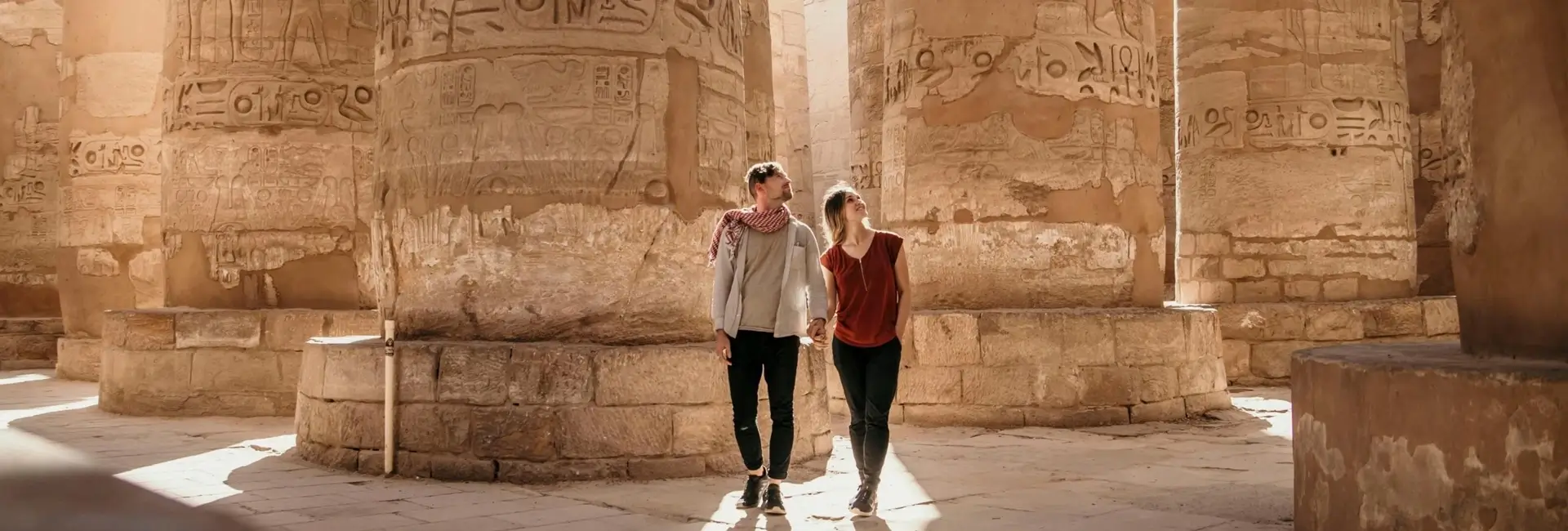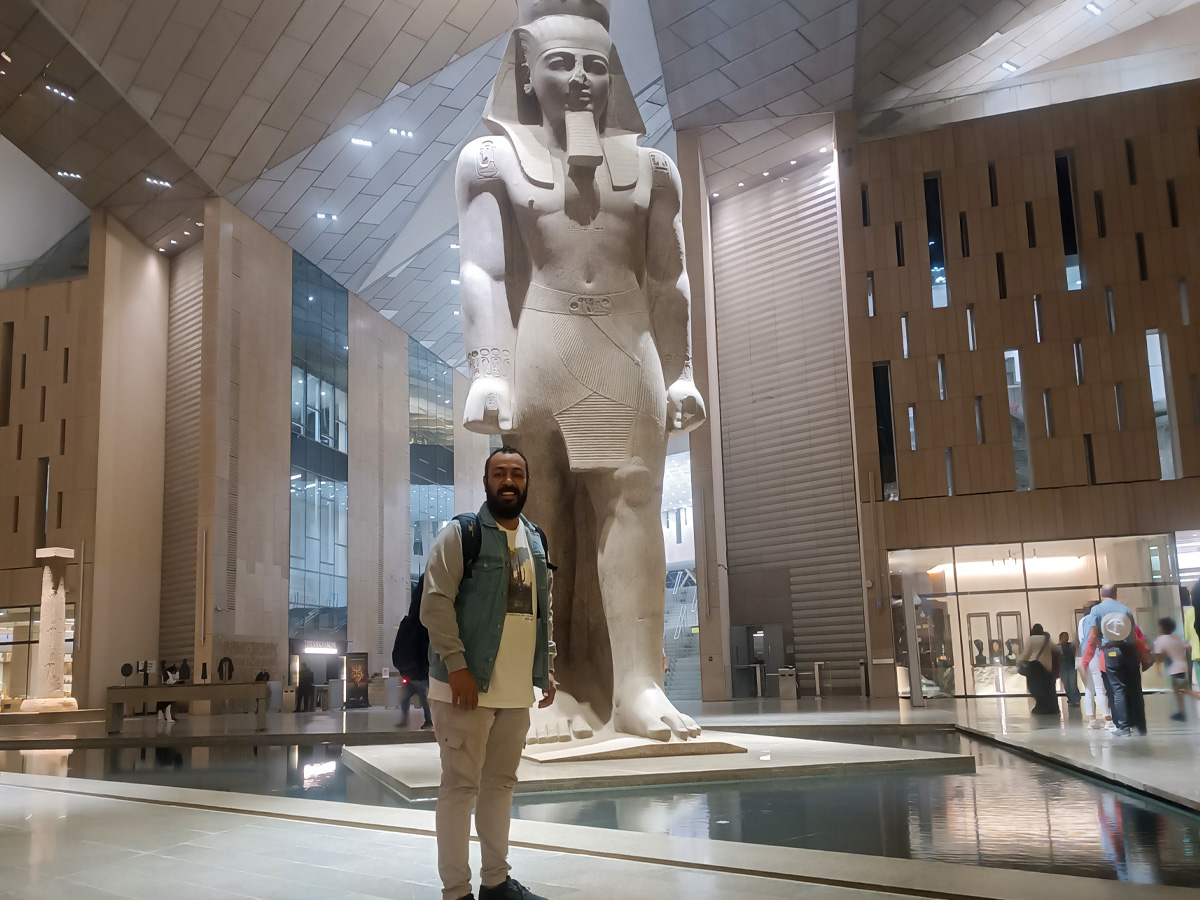
The question most people ask me before they arrive is: “Is Egypt expensive?”
My answer is always the same: Egypt is not cheap. But Egypt is of extraordinary value.
There is a difference. Cheap means you pay little. Value means that what you receive is worth what you pay. A $90-per-night hotel with a Nile view and a private guide who reads hieroglyphics while standing next to you in the Valley of the Kings — that is not cheap. But it is a value that would cost five times as much in comparable destinations.
The Egyptian pound has created a remarkable window for international visitors. As of 2026, one US dollar buys approximately 48 Egyptian pounds. A full Egyptian breakfast in a local café costs 60 pounds — roughly $1.25. The entrance fee to the Valley of the Kings is approximately $11. The complete treasures of Tutankhamun at the Grand Egyptian Museum: $18.
Understanding what Egypt actually costs — and where the value genuinely lies — is what this guide is for. Whether you're planning a shoestring adventure or a bucket-list luxury journey, every category here is drawn from real figures on the ground, not marketing copy.
Ready to meet Egypt’s legendary Temples? |
The Honest Opening — Egypt Is Genuinely Affordable
In 2026, Egypt's exchange rate makes it one of the most cost-effective major travel destinations on earth for visitors arriving from Europe, North America, the UK, or Australia. One US dollar converts to approximately 48–50 Egyptian pounds at ATMs — a rate that transforms what your budget can do.
Here is where international visitors sit, categorised honestly:
Traveller Type | Daily Budget (USD) | What It Covers |
Budget Traveller | $50 – $80 / day | Dorm or budget hotel, local street food, shared/Uber transport, major site entrances |
Mid-Range Traveller | $120 – $200 / day | 3–4★ hotel (often Nile/Pyramid view), private transport on key routes, restaurant dining, comprehensive sightseeing |
Luxury Traveller | $300 – $600+ / day | 5-star hotels or Nile cruise, private Egyptologist guide, fine dining, exclusive experiences |
⚠️ All daily budgets exclude international flights. Figures are per person based on double occupancy. Approximate. |
Egypt is genuinely one of the best-value destinations in the world for international tourists. Your money goes further here than in almost any comparable destination. But knowing where it goes — and where it disappears — is the difference between a well-planned budget and a surprising overspend.
Accommodation — The Biggest Variable in Your Egypt Travel Budget
Budget Accommodation — $10–30/night
Cairo, Luxor, and Aswan all have well-established backpacker infrastructure. Dorm beds in reputable hostels start from $5–10 per night; private budget rooms run $15–30. Quality varies significantly — always cross-check review scores before booking rather than choosing on price alone.
Typically included: basic air-conditioning, often a private bathroom, optional breakfast for $2–4 extra
Best booking platforms: Hostelworld, Booking.com, and local Egyptian hostel apps
Best for: Backpackers, solo travelers, or those prioritizing experience over comfort
💡 Local Tip
In Luxor, budget guesthouses on the West Bank (near the Valley of the Kings) tend to be cheaper, quieter, and more atmospheric than their East Bank equivalents — and many include rooftop Nile views at no premium.
Mid-Range Hotels — $50–150/night
This is Egypt's sweet spot. For $80–100 per night you get genuinely comfortable 3–4 star accommodation — often with Nile or Pyramid views, reliable air-conditioning, pool access, and breakfast included — at a price that would feel impossibly low in Paris, London, or Sydney.
• Cairo: Steigenberger El Tahrir (city center), various Pyramids-area 4-stars (Giza Plateau views from $90/night)
• Luxor: Sonesta St. George, Jolie Ville Resort range, Steigenberger Nile Palace
• Aswan: Philae Hotel (Corniche), Mövenpick Aswan (Elephantine Island)
Mid-range is Egypt's sweet spot. For $80–100/night you get genuinely comfortable accommodation with views that would cost five times that in comparable European destinations.
Luxury Hotels — $200–500+/night
Egyptian luxury hotels are world-class and — critically — exceptional value by international standards. A Nile-view suite at the Four Seasons Cairo costs what a modest hotel room costs in Paris or London.
• Cairo: Marriott Mena House (Pyramid view), Four Seasons Garden City, Kempinski Nile
• Luxor: Sofitel Winter Palace (colonial grandeur, Nile gardens), Steigenberger Achti Resort
• Aswan: Sofitel Legend Old Cataract (where Agatha Christie wrote), Movenpick Aswan
• For seniors or those prioritising comfort: Egypt's 5-star tier is genuinely accessible and makes a transformative difference to the experience
Nile Cruise — 4–5 Nights (Per Person)
A Nile cruise operates on a highly inclusive pricing model — most packages include all meals, an onboard Egyptologist, and excursions to all major Luxor and Aswan temples. Always compare cruise prices including what's covered rather than the headline figure alone.
• Standard cruise: $300–600 per person (all meals, Egyptologist, temple excursions)
• Luxury cruise: $1,000–3,000+ per person
• Dahabiya (traditional sailing vessel, max 12 passengers): $1,500–4,000+ per person — the most intimate Nile experience
💡 Insider Knowledge
The best-value Nile cruise window is September and early October — cooler than peak summer, 25–35% cheaper than December–February peak pricing, and the Nile light in late afternoon is extraordinary for photography.
Food — Eating Well Without Breaking Your Egypt Travel Budget
Egyptian food is one of the great gifts of budget travel. It is ancient, generous, flavorsome, and almost inexplicably cheap by international standards. Understanding the three tiers of eating in Egypt will shape your food budget entirely — and if you eat even partially local, your daily food spend becomes almost negligible.
Street Food and Local Restaurants — $3–10 per day
Egypt's street food tradition stretches back thousands of years. The ingredients that sustained pyramid builders — ful medames (fava beans), lentils, bread, onions — are still served from the same cast iron pots in every Egyptian city today. Except now they cost less than a dollar.
• Kushari: $0.50–1 — Egypt's iconic national dish. Lentils, rice, macaroni, chickpeas, crispy fried onions, tomato sauce, and chilli vinegar. Available everywhere, endlessly filling.
• Ful medames: $0.50–1 — the Egyptian breakfast, served from dawn from street carts across every city
• Ta'meya (Egyptian falafel): $0.20–0.50 each — made with fava beans rather than chickpeas, markedly different from Lebanese falafel
• Shawarma and kofta wraps: $1–2
• Fresh juice (mango, guava, hibiscus, sugarcane): $0.50–1 per glass
• Full local restaurant meal: $3–6 including a drink
Eating like an Egyptian on $5 a day is entirely possible and delivers some of the most extraordinary food on earth. The Kushari at El Tahrir in Cairo is better than most restaurant meals I've had anywhere.
💡 Local Tip
Ask your driver or guide where they eat lunch. Without exception, this leads to a local restaurant serving fresh, home-style Egyptian food at a fraction of tourist restaurant prices — and it will be the best meal of your trip.
Tourist Restaurants — $15–30 per meal
Mid-range, tourist-facing restaurants exist throughout Cairo, Luxor, and Aswan — around the souk areas in Aswan, along Luxor's Corniche, and in Cairo's Zamalek and Mohandiseen districts. Quality is generally good, hygiene is reliable, and prices are fair by international standards even if they feel elevated relative to local options.
• Budget: $15–25 per person including a main course and soft drink
• Recommended for: dinner on historical site days when you want comfort and air-conditioning after long hours outdoors
Hotel and Luxury Dining — $40–80+ per meal
Hotel restaurants, cruise ship dining, and Cairo's upscale dining scene (Zamalek, Garden City) approach international luxury price levels — but remain notably cheaper than comparable settings in London or New York. A dinner at the Winter Palace in Luxor or the Old Cataract terrace in Aswan carries a premium that is entirely justified by the setting.
Transport — The Biggest Cost Decision in Your Egypt Budget
How you choose to move around Egypt will define your travel budget more than any other single decision. The country's transport options span an extraordinary range — from 60-pence Uber rides to $150 domestic flights — and the right combination depends entirely on your itinerary, time constraints, and travel group size.
International Flights — The Largest Single Cost
International flights are excluded from the daily budget figures in this guide, but they represent the largest single cost of any Egypt trip. Timing your booking well matters significantly.
• From Europe / UK: approximately $200–600 return
• From North America: approximately $800–1,500 return
• From Australia: approximately $900–1,600 return
• Best booking window: 3–6 months in advance for peak season (December–February), 4–8 weeks for shoulder season
• Shoulder season flights (May, September) are often 20–30% cheaper than peak
Domestic Flights — The Smart Time Investment
For any trip covering Cairo, Luxor, and Aswan in 7–10 days, domestic flights are the most efficient use of your time and often your money when you factor in what you'd spend on accommodation for an extra travel night.
• Cairo → Aswan or Cairo → Luxor: approximately $60–150 one-way (EgyptAir, Nile Air)
• Budget 2–3 domestic legs for a standard Golden Triangle trip: $200–400 total per person
• Book through airline websites directly — third-party aggregators sometimes show incorrect pricing for Egypt domestic routes
Sleeper Train — The Atmospheric Budget Option
The Watania Sleeping Trains between Cairo and Luxor/Aswan are a genuine travel experience — and arguably the best value night transport in the region.
• Cost: approximately $80–100 per person (includes dinner service and breakfast)
• Journey time: 10–12 hours Cairo to Luxor; 13–14 hours to Aswan
• Practical benefit: saves a hotel night — a real financial saving for solo or couple travellers
• Day trains (local service, no sleeping accommodation): $5–15 per person — very cheap but basic
💡 Insider Tip
Book the Watania sleeper train at least 2 weeks ahead during high season (December–February). Trains run nightly but upper-tier cabins sell out. Book directly at Cairo's Ramses Station or via an authorized local agent.
Uber in Cities — The Best Value Transport Secret
Uber operates across Cairo, Luxor, and Aswan and represents one of the single most welcome financial surprises for visiting travellers. The fares are transparently priced, there is no negotiation, and the value is almost impossibly good by international standards.
• Cairo: most journeys within tourist zones cost 30–80 EGP ($0.60–$1.60)
• Luxor / Aswan: similar range — cross-city journeys rarely exceed 100 EGP ($2)
Uber in Egypt is an extraordinary value. A 20-minute ride across Cairo costs less than a coffee in London.
Private Drivers for Day Trips — The Group Value Option
For day trips to sites outside city centers — Saqqara, Memphis, Dahshur from Cairo; West Bank sites from Luxor; Kom Ombo and Edfu from Aswan — a private driver offers the best combination of flexibility, comfort, and value, particularly for groups of two or more sharing the cost.
• Half-day (4 hours): approximately $40–80
• Full-day (8 hours): approximately $80–150
• Cost per person (group of 4): $20–40 for a full day — better than any shared tour for this type of transfer
• Always agree on the full itinerary and price in advance; reputable drivers will accept written confirmation
Entrance Fees — The Egypt-Specific Budget Line Most Travelers Forget
Entrance fees are the most common budget surprise for first-time visitors to Egypt. They are reasonable in absolute terms — but they accumulate quickly across a comprehensive 10-day itinerary. Budget for them explicitly rather than discovering them mid-trip.
Site
EGP (approx.)
USD (approx.)
Notes
Pyramids of Giza
360
~$7
Interior tomb tickets sold separately
Grand Egyptian Museum (GEM)
~900
~$18
Book online in advance to guarantee entry
Valley of the Kings
560
~$11
Standard ticket covers 3 tombs; Tutankhamun extra
Karnak Temple
450
~$9
Sound & Light Show ticket sold separately
Luxor Temple
300
~$6
Spectacular at night — consider evening visit
Hatshepsut Temple (Deir el-Bahari)
240
~$5
Early morning visit essential (heat + crowds)
Philae Temple
450
~$9
Add motorboat fee (~50 EGP) to reach island
Abu Simbel (both temples)
~615
~$12
Worth the early-morning flight or road trip
Nubia Museum, Aswan
300
~$6
Underrated — allow 2 hours minimum
Saqqara
360
~$7
Includes Step Pyramid complex
10-Day Trip Total (approx.)
~14,000 EGP
~$285
Varies significantly by specific sites visited
⚠️ All fees are approximate and subject to change. Verify locally or via Egypt's Ministry of Tourism official resources before visiting. Fees are periodically reviewed and updated.
The entrance fees surprise many first-time travelers. $285 per person for a comprehensive 10-day Egypt trip is genuinely reasonable — but budget for it rather than discovering it mid-trip.
The Luxor Pass: For travelers spending 3 or more days in Luxor visiting many sites, the Luxor Pass (approximately $200 for foreign tourists, covering most Luxor monuments for one week) is worth considering against your specific itinerary. If you plan to visit the Valley of the Kings multiple times, Karnak, Luxor Temple, Hatshepsut, Deir el-Medina, and Luxor Museum, the pass typically saves $40–60 per person.
Tours and Guides — The Investment That Changes Everything
This is the section most budget travel guides either gloss over or eliminate entirely. I will give you an honest local's perspective: at the majority of Egypt's significant historical sites, a knowledgeable guide is not a luxury. It is an efficiency tool — and often the difference between standing in front of extraordinary things and actually understanding what you're seeing.
When a Guide Is Essential
• Valley of the Kings — minimal on-site interpretation; a guide transforms what you see from decorated walls to a 3,500-year story of royal burial theology
• Karnak Temple Complex — the largest ancient religious complex on earth; navigating it without guidance means missing 70% of what's there
• Abu Simbel — the context of Ramesses II's military campaigns and the extraordinary engineering of the UNESCO rescue relocation is almost entirely lost without explanation
• The Grand Egyptian Museum — the collection is vast; a guide focuses your time and energy on the highest-impact sections
When a Guide Is Optional
• The Pyramids of Giza — the scale speaks for itself; basic context from a guidebook is sufficient for some travellers
• Street food walks and souk visits — these are best experienced freely, following your instincts
• Nile walks and Corniche evenings — unstructured exploration is appropriate and enjoyable
Guide Pricing Reference
Guide Type
Cost (per group)
Best For
Shared group tour (half-day)
$30–50 per person
Budget travellers, solo travellers joining a group
Private Egyptologist guide (full-day)
$100–200 per group
Couples, families, those wanting depth and flexibility
7-day private guide service
$700–1,400 per group total
Deep-dive travellers, history enthusiasts, premium experience
The private guide is not a luxury in Egypt. It is an efficiency tool. Every hour with a knowledgeable Egyptologist covers more ground — mentally and practically — than two hours without one.
Tipping — Egypt's Parallel Currency
Tipping — baksheesh in Arabic — is woven into the fabric of Egypt's service economy. It is not optional, it is not a scam, and it is not targeted primarily at tourists. It is the way that guides, drivers, hotel staff, and service workers supplement income in a country where service industry wages are structurally low. Understanding this and budgeting for it removes friction and adds warmth to every interaction.
Who to Tip
Amount
Private Egyptologist guide
$5–15 per day (per group)
Private driver
$3–8 per day
Hotel housekeeping
20–30 EGP per day
Bathroom attendants
5–10 EGP
Baggage carriers (hotel, airport)
10–20 EGP per bag
Restaurant servers (add to service charge)
10–15% of bill
Temple guards (if they open doors/lights)
20–30 EGP per interaction
Build $7 per person per day into your Egypt travel budget for tips. Think of it as part of the local economy, not an inconvenience.
💡 Pro Tip
Always carry small-denomination EGP notes (10, 20, 50 EGP) specifically for tips. Nothing breaks the flow of a warm exchange faster than not having change. Ask your hotel front desk to break larger notes when you check in.
The Complete Budget Calculator — Sample 10-Day Egypt Trip Costs
The following table builds a realistic 10-day Egypt trip cost across all three budget tiers. All figures are per person, based on double occupancy, and exclude international flights.
Cost Category
Budget
Mid-Range
Luxury
Accommodation (9 nights)
$250
$720
$2,700
Food (10 days)
$80
$250
$600
Domestic flights (3 legs)
$200
$250
$350
Entrance fees (major sites)
$250
$285
$320
Local transport (Uber / taxis)
$50
$100
$200
Private guides
$400
$900
$2,000
Abu Simbel excursion
$80
$120
$180
Hot air balloon (Luxor)
$70
$90
$150
Tips (baksheesh)
$70
$100
$200
Souvenirs / miscellaneous
$50
$150
$500
TOTAL (excl. international flights)
~$1,500
~$2,965
~$7,200
⚠️ International flights not included. All figures per person based on double occupancy. Budget totals are approximate and will vary based on specific sites visited, travel dates, and booking timing.
Money Tips — Making Your Egypt Travel Budget Go Further
These are the practical money habits that separate experienced Egypt travelers from first-timers — and they make a real, measurable difference to what your budget delivers.
• ATMs over exchange offices: Egyptian ATMs (particularly at airports and major bank branches) give the best available exchange rate. Withdraw EGP on arrival rather than converting currency at home or at hotel desks. Your home bank's international rate will be close to the interbank rate; hotel desks and street exchange offices offer markedly worse rates.
• Carry both cards and cash: Cards are accepted at hotels, upscale restaurants, GEM, and most archaeological sites, and large supermarkets. Cash (EGP) is essential for street food, markets, tips, Uber (cash payment option), and anywhere outside tourist infrastructure.
• Keep small denomination notes: Always have 10, 20, and 50 EGP notes available. Change is often difficult to achieve in markets and among smaller vendors. A pocketful of small notes makes every small transaction smoother.
• Negotiate respectfully: Transport (non-Uber taxis), souvenir market prices, and some tour packages are negotiable. Negotiate warmly and with humor — Egyptians are skilled negotiators and genuinely enjoy the process. Never negotiate aggressively or dismissively.
• Off-season savings: May and September deliver 30–40% price reductions on accommodation and Nile cruises with minimal quality compromise. The heat is real but manageable with early morning site visits and afternoon rest. October represents the sweet spot — better weather, prices beginning to rise, but still below peak.
• Luxor Pass calculation: Calculate your specific Luxor itinerary against the $200 pass before buying. The pass typically saves money for anyone spending 3+ days visiting the Valley of the Kings multiple times, Karnak, Hatshepsut, Deir el-Medina, and the Luxor Museum.
Is Egypt Worth the Cost?
A mid-range 10-day Egypt trip — approximately $3,000 per person excluding international flights — covers one of the world's most concentrated collections of extraordinary human experience. You will stand inside monuments built 4,500 years ago. You will sail a river that has defined civilization for millennia. You will eat food prepared the same way for thousands of years.
Comparable in absolute cost to a week in Paris or Rome — but what Egypt gives you for that price is without parallel. The density of historical experience, the warmth of the culture, and the sheer physical scale of what you encounter are not replicated anywhere else on earth.
I have guided visitors from 40 countries. Without exception, every single one of them says Egypt was a better value than they expected. Not because it's cheap — it isn't always — but because what it gives you for the price is extraordinary.
The key is budgeting honestly — for entrance fees, for guides, for tipping — and not discovering these costs mid-trip. This guide gives you those real numbers. Your Egypt trip, planned with accurate expectations, will exceed them.
Frequently Asked Questions — Egypt Travel Budget
Q1: How much does a trip to Egypt cost per day?
Daily costs in Egypt depend significantly on travel style. Budget travelers can manage on $50–80 per day, including basic accommodation, local food, transport, and entrance fees. Mid-range travelers should budget $120–200 per day for comfortable hotels, some private transport, and comprehensive sightseeing. Luxury travellers spend $300–600+ per day for 5-star hotels or Nile cruises, private Egyptologist guides, and fine dining.
Q2: Is Egypt cheap for tourists?
Egypt is excellent value rather than simply cheap — the distinction matters. The Egyptian pound's current exchange rate (approx. $1 = 48–50 EGP) makes international visitors' money go considerably further than in comparable European or North American destinations. Street food is remarkably affordable ($1–5 per meal), local transport is minimal cost, and even mid-range hotels offer quality at accessible prices. Where costs accumulate: entrance fees ($285+ for comprehensive 10-day visits), private Egyptologist guides ($100–200/day), and domestic flights ($150–300 for 2–3 legs).
Q3: How much should I budget for entrance fees in Egypt?
Budget approximately $285 per person for a comprehensive 10-day trip covering major sites (Pyramids, GEM, Valley of the Kings, Karnak, Luxor Temple, Hatshepsut, Philae, Abu Simbel, Nubia Museum, Saqqara). Individual site costs range from free (Colossi of Memnon) to approximately $18 (Grand Egyptian Museum). The Luxor Pass ($200 for foreign tourists) can save money for those spending 3+ days at Luxor sites.
Q4: Should I bring USD or Egyptian Pounds to Egypt?
Both. Egyptian Pounds are needed for street food, local transport, market purchases, and tips. USD is useful for tipping guides and drivers (who often prefer USD), paying the visa on arrival ($25–30 USD), and some Abu Simbel transport operators who price in USD. The best exchange rate comes from ATMs in Egypt using your home bank card — withdraw EGP on arrival rather than exchanging currency at home. Always keep a supply of small-denomination EGP notes (10, 20, 50 EGP) for daily use.
Q5: Is a private guide worth the cost in Egypt?
For most historical sites, yes — particularly at the Valley of the Kings, Karnak, Abu Simbel, and the GEM. Egypt's ancient sites have minimal on-site interpretation; a knowledgeable Egyptologist transforms viewing stone walls into understanding 3,500 years of civilization. Private guides cost $100–200 per group per day — spread across 2–4 people, this represents exceptional value. Budget for a private guide for Cairo, Aswan, and Luxor at a minimum.
Q6: When is the cheapest time to visit Egypt?
May and September offer the best balance of savings and viability — 30–40% lower prices on accommodation and Nile cruises compared to peak season (December–February), while temperatures are warmer but manageable with early starts. June, July, and August offer the lowest prices (30–50% below peak) but come with extreme heat (40–46°C in Upper Egypt). October represents an excellent value-timing sweet spot — improving weather, prices still below peak. See our Best Time to Visit Egypt guide for full seasonal details.
Ready to Plan Your Egypt Trip?
Our local Egyptologist guides help you build the perfect itinerary — at any budget.
💬 Message Us on WhatsApp — Free, No Obligation