The moment you step through the arrivals doors at Cairo International Airport, Egypt hits you all at once. The noise. The warmth — not just the temperature, but the voices pressing in from every direction. The smell of diesel and cardamom and something you can't quite name but will spend the rest of your life trying to recreate. And somewhere in the middle of all of it, a man is holding a sign with your name on it, smiling like he's been waiting for an old friend.
That man is probably me, or someone very much like me.
I've been guiding first-time visitors through Egypt for over twenty years. I have seen the wide-eyed panic on the way in and the heartbroken reluctance on the way out. And in between, I have watched people who arrived nervous and uncertain fall completely, irreversibly in love with this country. But I've also seen avoidable mistakes — the wrong vendor, the unbuttoned shirt in the mosque doorway, the taxi with no agreed price. Small things that no guidebook ever thinks to mention.
These are the 30 Egypt travel tips for first-time visitors that I wish every traveler had read before landing. Honest, warm, and built from experience — not a warning document, but an invitation. Egypt is not complicated. She just rewards those who understand her a little before they arrive.
✅ Key Takeaways — Egypt Travel Tips for First-Timers Get your e-Visa before you fly. Bring $1 USD bills and Egyptian pounds — cash is king. Learn just 10 Arabic words — they transform how Egyptians welcome you. Baksheesh is cultural, not optional — budget for it and embrace it. Always agree on the price before any ride, trip, or purchase. Dress modestly outside resorts — it's your fastest welcome. A good local guide isn't a luxury — they are the single biggest upgrade to your Egypt experience. |
Before We Start — A Word from Your Local Guide
Egypt is one of those rare destinations that defies everything you thought you knew about travel. It is older than history itself, louder than you expect, more generous than you can imagine, and more beautiful than any photograph has ever managed to capture. Millions of first-time visitors arrive every year — and the overwhelming majority leave profoundly changed by the experience.
What follows is a conversation, not a checklist. Think of it as that honest briefing your travel agent was never qualified to give you — the kind you'd only get from a local friend who loves his country and wants your trip to go perfectly. We'll move through six categories: preparing at home, arriving in Egypt, handling money, understanding culture, looking after your health, and getting around. By the end, you'll be ready.
"Egypt is not complicated. It just rewards those who understand her a little before they arrive."
Before You Leave Home — 8 Things to Prepare in Advance
Think of this section as packing your confidence alongside your luggage. The travelers who arrive most at ease are the ones who sorted out these eight things before they ever boarded the plane. None of it is complicated. All of it makes a difference.
Tip 1 — Get Your Visa Sorted Before You Land (It's Easier Than You Think)
Egypt offers a straightforward e-Visa that you can apply for online at the official Egyptian e-Visa portal — usually processed within a few days. Apply at least two weeks before your departure. The alternative is a visa on arrival available to most nationalities at Cairo International Airport, priced at $25 USD, but the queue in peak season can stretch across a packed arrivals hall for well over an hour.
💡 Local Truth I've watched first-timers spend 90 minutes in the visa-on-arrival queue after a nine-hour flight while their guide waits on the other side of the door. The e-Visa takes twenty minutes online and costs the same. Do it before you fly. Internal link: → How to Get a Visa for Egypt |
Tip 2 — Bring Small USD Bills. More Than You Think.
Egypt runs significantly on cash — and specifically on small denomination US dollars and Egyptian pounds (EGP). US dollars are widely accepted across tourist services: entrance fees, camel rides, guide tips, and many market vendors. Egyptian pounds cover local transport, street food, and everyday purchases. ATMs are available in major cities but can run empty during peak season. Never rely solely on your card.
My standard advice: bring at least $200–300 USD in mixed denominations — and always include a generous supply of $1 bills. You will reach for them dozens of times a day.
💡 Insider Tip Bring a separate small wallet or money clip for your $1 bills. You'll use them constantly for tips, small vendors, and entrance fees — and fumbling through a full wallet at every interaction slows everything down. Small bills equal smooth travel. |
Tip 3 — Download These Apps Before You Board
Four apps will transform your experience in Egypt. Download them, configure them, and test them before you leave home.
• Google Maps — download offline Egypt maps before departure; internet access on arrival can be patchy in the first hour.
• Uber — available in Cairo, Luxor, and Aswan. Fixed prices, no negotiation, trackable journey. Essential for first-timers.
• Google Translate — the Arabic camera mode is genuinely remarkable for reading menus, signs, and packaging.
• WhatsApp — how Egypt communicates. Your guide, driver, and hotel will all use it.
🌙 Talk to Us Before You Land
Save our WhatsApp number before you board. Have a question about your itinerary, your arrival, or what to pack? Our team answers within minutes.
Tip 4 — Check Vaccinations and Travel Insurance Early
There are no mandatory vaccinations to enter Egypt for most nationalities. However, travel medicine specialists commonly recommend hepatitis A and typhoid protection, particularly if you plan to eat street food (which I strongly encourage you to do). Check your country's official travel health advice at least six weeks before departure.
Travel insurance is non-negotiable. Ensure your policy includes emergency medical care and repatriation cover. Medical facilities in major tourist zones are good; outside them, English-speaking care is limited. A good insurance policy costs less than one night in a Cairo hotel and is worth every penny. Egyptian pharmacies, incidentally, are outstanding — pharmacists speak English, diagnose common conditions, and dispense most medications without a prescription.
Tip 5 — Learn 10 Arabic Words. Just 10.
I have been guiding tours for over two decades. I have never — not once — seen a visitor use even a single Arabic word and not receive a smile wider than the Nile in return. You do not need fluency. You need ten words and the courage to use them.
🗣️ 10 Essential Arabic Words for Egypt First-Timers See the full phonetic table below for your ready-to-screenshot reference. |
Phonetic | Arabic | Meaning |
Marhaba / As-salamu alaykum | مرحبا / السلام عليكم | Hello / Peace be upon you |
Shukran | شكراً | Thank you |
La | لا | No |
Aywa | أيوا | Yes |
Bikam? | بكام؟ | How much? |
Min fadlak / Min fadlik | من فضلك | Please (m/f) |
Ma'a salama | مع السلامة | Goodbye |
Mumtaz | ممتاز | Excellent / Wonderful |
Habibi / Habibti | حبيبي / حبيبتي | My friend (m/f) — used warmly |
La shukran | لا شكراً | No, thank you — the polite end to a sales pitch |
"The moment you use one word of Arabic, you stop being a tourist and start being a guest. The country opens."
Tip 6 — Understand What You're Walking Into (In the Best Way)
Egypt is a predominantly Muslim country, with approximately 90% of the population. This shapes the rhythm of daily life in beautiful and important ways. Friday is the holy day: some sites operate reduced hours, and you may find the pace of the city shifts completely in the late morning as families head to prayers. Ramadan — when it falls in your travel window — changes the entire character of Egypt (see Tip 23 for how to navigate it). Understanding these rhythms isn't about restriction — it's about traveling with awareness. Internal link: → Best Time to Visit Egypt.
Tip 7 — Book Your First Two Nights and Your Airport Transfer in Advance
Cairo International Airport can be an overwhelming first impression of Egypt — especially after a long-haul flight. Pre-arranging your airport pickup removes the single biggest stress point of the first 24 hours. A pre-booked driver holding your name on a sign is worth every cent. Similarly, having confirmed accommodation for nights one and two gives you a fixed point to orientate around. After that, leave room for spontaneity — Egypt rewards the open itinerary.
💡 Local Truth I tell every first-timer the same thing: sort your first night and your airport pickup. After that, I will look after the rest. But those two things, done in advance, mean you step out of arrivals with confidence instead of chaos. |
Tip 8 — Pack Light, Pack Right
Egypt's summer temperatures regularly exceed 40°C. In that heat, linen and cotton are not preferences — they're survival. Synthetics become unwearable within an hour of leaving air conditioning. A lightweight scarf is the single most versatile item in your luggage: essential for entering mosques, useful as a sunshield, and occasionally a lifesaver in a desert sandstorm. Pack sunscreen SPF 50+, a reusable water bottle, and at least one smart-casual outfit — Nile cruise dinners and the better Cairo restaurants have a relaxed but presentable dress code. Internal link: → Egypt Packing List.
Arriving in Egypt — 5 Things That Will Save Your Sanity
The first hours in Egypt shape the entire trip. Here is how to read what can feel like chaos — and find the order inside it.
Tip 9 — Cairo Airport: Stay Calm, Stay Firm
The arrivals hall at Cairo International Airport is busy, purposeful, and occasionally loud. The moment you emerge from customs, individuals may offer you taxis, tours, currency exchange, and hotel transfers. Some are legitimate. Most are unnecessary because you've already pre-arranged your pickup (see Tip 7). Walk purposefully toward the official arrivals barrier, look for your name on a sign, and ignore any offers that find you first. The airport is not dangerous — it is simply enthusiastic.
If you do need to exchange currency at the airport, the rates are acceptable for a small initial amount — enough to cover your first taxi or SIM card. Change the rest at a bank or exchange bureau in the city.
Tip 10 — The Traffic is Not an Emergency
Cairo is home to roughly 22 million people. The traffic is legendary. Google Maps will tell you that your hotel is 22 minutes from the airport. On a peak weekday, allow 90 minutes. Factor it into every plan, every day, for your entire Cairo stay. The universal remedy: Uber, which provides a fixed upfront price, a trackable route, and a driver who speaks enough English to manage the basics — all without a single negotiation.
💡 Local Truth If you are late because of traffic, every Egyptian you meet will completely understand. It is simply part of life here. The temples have waited three thousand years. They will wait a little longer for you. |
Tip 11 — Your First Impression of Cairo is Not the Whole Story
Cairo can overwhelm on arrival — noise, density, diesel, dust, and the feeling that the city is moving faster than you can process. This is completely normal. Give Cairo twenty-four full hours before forming an opinion. It is a city built for evenings: by sunset, the streets fill with families, the smell of grilling meat drifts across the Nile, the call to prayer echoes between minarets, and the city reveals the warmth that has always been there beneath the noise.
"I have watched so many visitors arrive stressed and leave heartbroken. Give Cairo time. She will earn it."
Tip 12 — Egyptian Hospitality is Real — and Not Always Transactional
Egyptians will offer you tea, directions, unsolicited local history, and genuine conversation — often with absolutely no expectation of anything in return. The challenge for first-timers is learning to distinguish genuine warmth from the preamble to a sales pitch. My rule of thumb: if you are inside a shop, it is commerce; if you are on the street, it is usually just kindness. Embrace both. Don't let the occasional commercial exchange harden you against the extraordinary generosity that defines this country.
Tip 13 — SIM Card: Buy One in the First Hour
Egyptian SIM cards from Vodafone Egypt or Orange Egypt are available directly from the airport arrival zone. Bring your passport for registration — it is required. Data packages are affordable and essential: Uber, Google Maps, WhatsApp communication with your guide, and everything else that makes modern travel work runs on your phone. Do not rely on roaming charges from home. Buy local, pay almost nothing, and stay connected.
Money, Tipping & Haggling — 5 Tips That No One Prepares You For
Money is the topic that causes first-timers the most anxiety before they arrive — and the most relief once they understand the system. It is not complicated. It just works differently from what you are used to.
Tip 14 — Baksheesh is a System, Not a Scam
Across Egypt, tipping — known as baksheesh (بقشيش) — is woven into the fabric of daily economic life. It is not optional, and it is not a manipulation. It is simply the way that service workers across the hospitality sector — guides, drivers, hotel porters, bathroom attendants, the man who unlocks the side chamber of a tomb just for you — supplement income in a system where base wages are low.
Budget for baksheesh as a line item in your daily spend. Give it warmly, give it consistently, and understand that it is going directly to real Egyptian families who depend on tourism. The tipping cheat sheet below removes all the guesswork.
Who to Tip | USD Amount | EGP Amount |
Private Tour Guide | $5–10 USD / day | 20–50 EGP / day |
Driver (day trips) | $2–5 USD / day | 10–25 EGP / day |
Hotel Porterage (bags) | $1–2 USD / bag | 5–10 EGP / bag |
Hotel Housekeeping | $1–2 USD / night | 5–10 EGP / night |
Restaurant (no service chg) | 10% of bill | ~10% of bill |
Bathroom Attendant | 50¢ – $1 USD | 5–10 EGP |
Felucca / Boat Skipper | $2–3 USD / trip | 10–15 EGP |
Temple Guardian (unlocks extra room) | $1–2 USD | 5–10 EGP |
Tip 15 — Always Agree on the Price Before You Start Anything
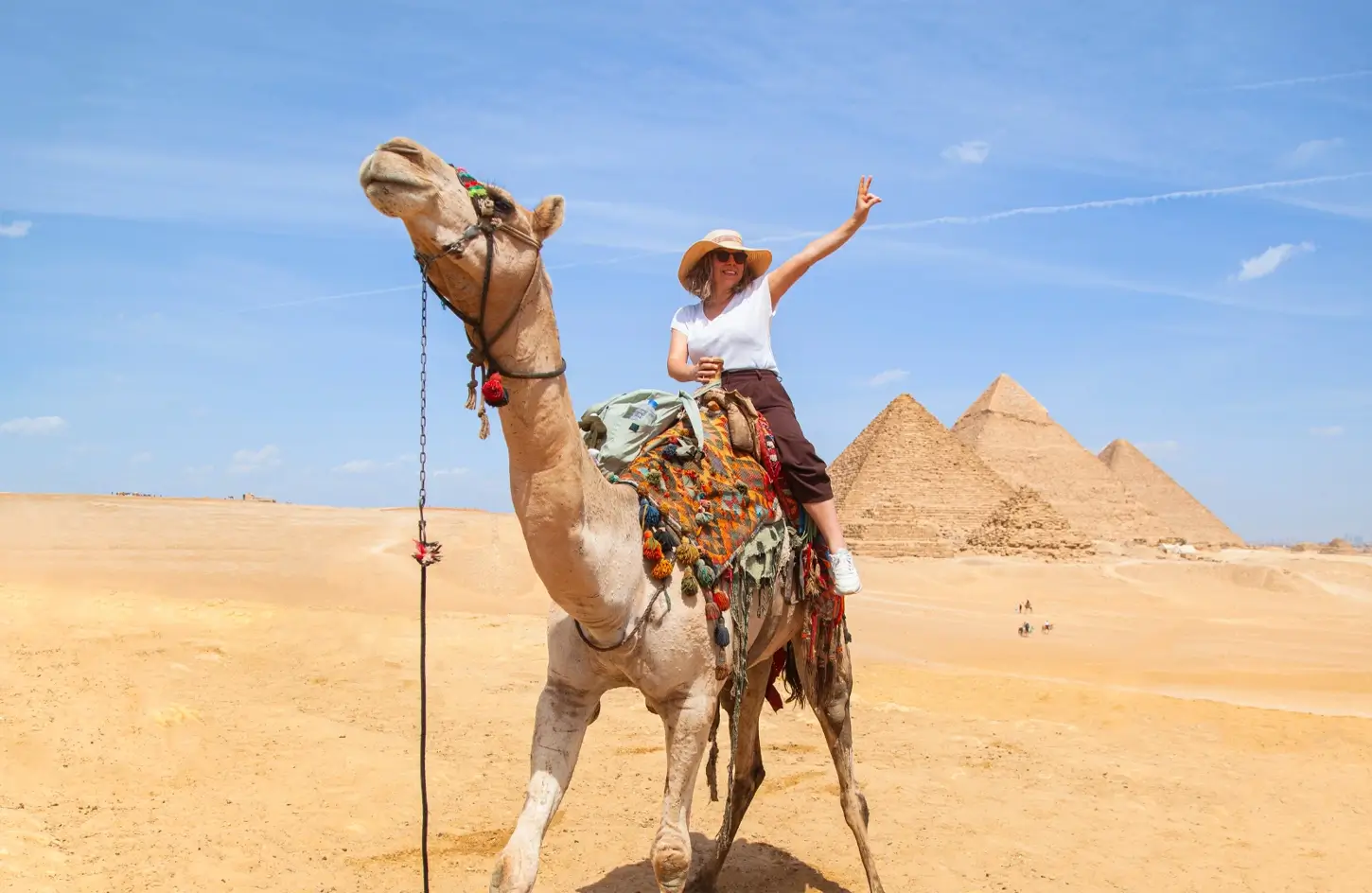
Camel rides, felucca trips, horse carriages, local taxis, horse-and-cart drivers around the Pyramids plateau — for all of these, the price must be agreed before you commit to a single step. This is not rudeness. It is expected and respected by everyone involved. A misunderstanding at the end of a camel ride — when you are already on it — is uncomfortable for everyone. Agreement upfront protects both parties and keeps the interaction friendly.
"In Egypt, the price is a conversation, not an announcement. Engage with it. Agree it. Then enjoy the ride."
Tip 16 — Haggling in Markets: The Art and the Limits
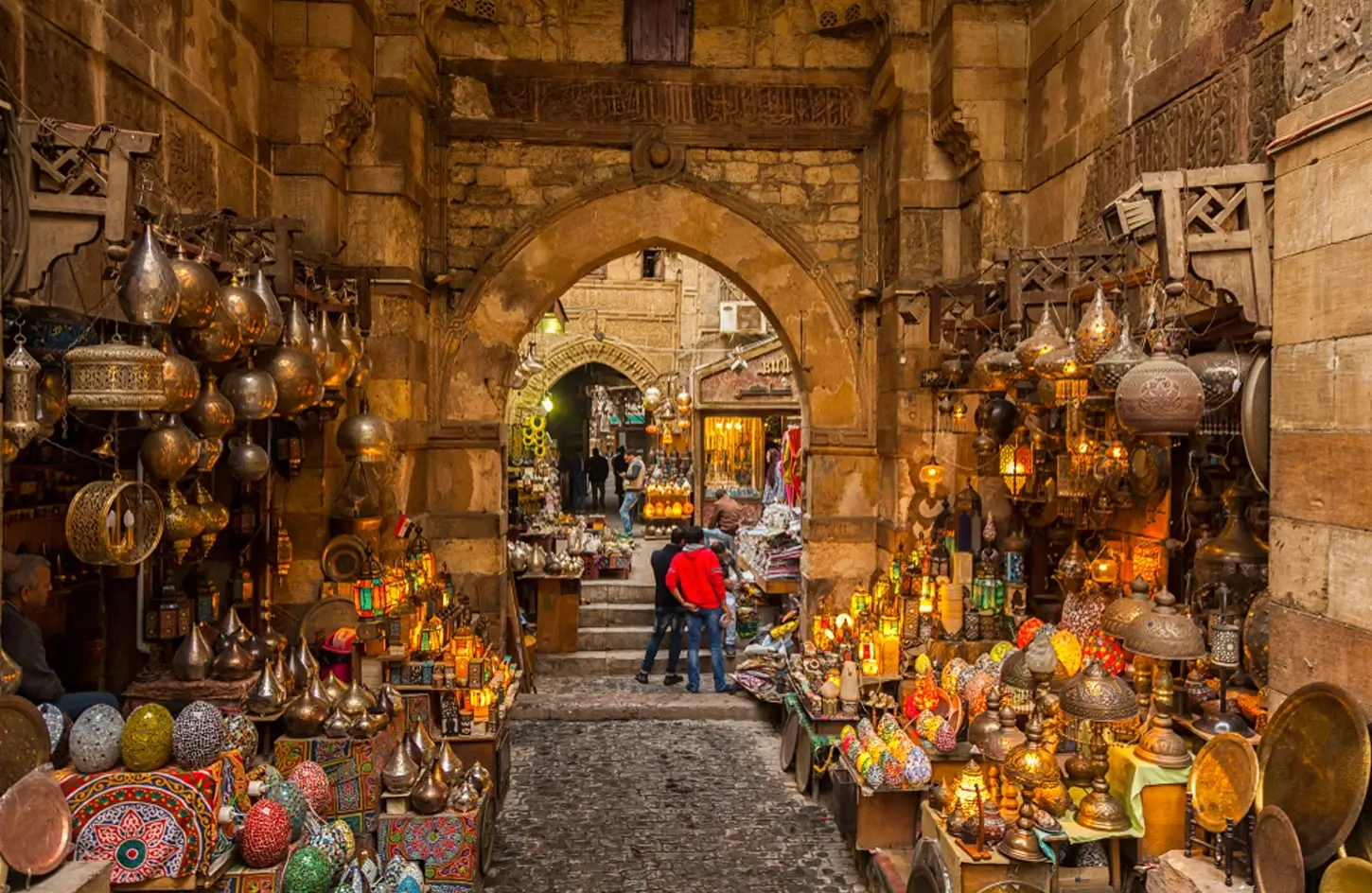
The bazaars of Khan el-Khalili in Cairo and the souks of Luxor and Aswan operate on a negotiated price system. The opening price offered is rarely the real price. A counter-offer of 50–60% of the asking price is a perfectly normal opening position — find a middle ground that leaves both sides smiling. Fixed-price shops exist and are usually marked as such; don't haggle in those.
Approach haggling as a game and not a battle. No one should feel cheated at the end of a transaction. If you reach a price that feels fair, take it — even if it's higher than you might have paid with more persistence. The difference is usually a few pounds. The goodwill it preserves is worth considerably more.
Tip 17 — Keep Small Change Constantly Available
Egypt has a near-chronic shortage of small change. Whenever you have the opportunity to break a large bill — at a petrol station, a supermarket, a large pharmacy — take it. Carry EGP 5, 10, and 20 notes in a pocket you can access without opening your main wallet. And keep your $1 USD bills in a completely separate, immediately accessible pocket. You will reach for them more often than you expect.
💡 Practical Tip The 'no change' situation — where a vendor cannot break a larger bill — is a daily occurrence in Egypt. It is not a tactic; it is simply how the cash economy functions. Come prepared with small denominations, and you will float through these moments effortlessly. |
Tip 18 — Credit Cards Work in Hotels and Upscale Restaurants — Nowhere Else
Visa and Mastercard are accepted in most tourist-facing hotels, upscale restaurants, and larger shops. For everything else — local markets, street food, local transport, most entrance fees, pharmacies, and the thousand small transactions of daily Egyptian life — cash is the only option. ATMs are available in major cities but can run dry during peak season. Always carry at least two days' worth of spending cash on your person. Never be caught without it.
Culture, Etiquette & Respect — 6 Tips That Will Open Every Door
This is, for me, the most important section in this entire guide. Understanding Egyptian culture is not a constraint on your freedom — it is what transforms a sightseeing trip into a genuine human experience. These six principles cost you nothing and give you everything.
Tip 19 — Dress Modestly Outside the Resort
Egypt's cities, temples, markets, and religious sites all call for modest dressing — covered shoulders and covered knees for both men and women. This is not about rigid rules; it is about basic cultural respect that will immediately change how you are received. Within beach resorts, normal swimwear is perfectly appropriate. Outside them, it is not. Women will find a lightweight linen scarf the single most useful item they pack — it covers the shoulders in seconds, keeps the sun off in the desert, and provides the head covering required in mosques.
💡 Cultural Truth Dressing with awareness isn't a restriction — it is the fastest way to be welcomed. I have seen the difference it makes every single day of my career. |
Tip 20 — Remove Your Shoes Before Entering a Mosque
This applies always and without exception, even if other visitors appear to be walking through without removing theirs, which would be unusual and incorrect. A quiet voice, a respectful posture, and covered hair (for women) are all you need. Most of Egypt's mosques warmly welcome non-Muslim visitors — this is a privilege that comes with responsibility, not a right. The Al-Azhar Mosque and the Ibn Tulun Mosque in Cairo are among the most beautiful ancient interiors in the world. Enter them with reverence, and they will give you moments you will carry for life.
Tip 21 — Photography: Always Ask First
Egyptians are, in my experience, among the most photogenic and photographically generous people on earth — but the courtesy of asking first matters enormously. A smile and a raised camera toward a person, waiting for a nod, is the complete transaction. At ancient temples and archaeological sites, check signage: some chambers and specific artifacts are photography-restricted (and enforcement is real). Photographing any military installation, government building, or security checkpoint is prohibited and taken seriously. This applies in all Egyptian cities.
Tip 22 — Public Displays of Affection: Keep It Subtle
Holding hands between couples is perfectly acceptable across Egypt. Kissing or close physical contact in public is frowned upon by most Egyptians outside of resort areas. Same-sex couples should be aware that Egypt is socially conservative on this point and exercise appropriate discretion when away from international resort zones. Egypt is, overall, a deeply welcoming country for visitors of all backgrounds; small cultural awareness is all that is needed.
Tip 23 — Ramadan: An Invitation, Not an Inconvenience
If your visit to Egypt falls during Ramadan (رمضان) — the Islamic holy month of fasting — avoid eating, drinking, or smoking in public spaces during daylight hours as a mark of respect for those who are fasting. Most tourist-facing restaurants remain open all day. Local eateries typically open only from Iftar — the sunset meal that breaks the fast — onwards.
But here is the thing nobody warns you about: Ramadan in Egypt is one of the most extraordinary things you will ever witness. The lanterns. The generosity. The communal spirit at Iftar when entire streets sit down to eat together. If an Egyptian family invites you to join them for Iftar, say yes immediately, without hesitation. Internal link: → Best Time to Visit Egypt.
🌙 Insider Insight "Ramadan in Egypt is not an inconvenience for visitors who approach it with awareness. It is a gift. Lanterns everywhere. Generosity everywhere. The Egypt I love most, compressed into one sacred month." |
Tip 24 — The 'La Shukran' Walk
Persistent vendors exist around every major tourist site in Egypt — the Pyramids, Karnak, the Valley of the Kings, Philae. They are professionals, not criminals, and they are not personally offended by a firm 'no.' The most effective technique is the La shukran walk: a calm, clear "la shukran" (no thank you), eyes forward, pace maintained, no eye contact held. Do not feel guilty. Do not engage further. You are not being rude — you are being clear. That is understood and respected.
Food, Water & Health — 4 Tips to Keep You Well and Well-Fed
Egyptian cuisine is one of the world's great unsung culinary traditions — and it is available on every street corner for almost nothing. This section is designed to keep you healthy enough to eat it all.
Tip 25 — Never Drink Tap Water — But Don't Miss the Fresh Juice
Tap water in Egypt is not safe for visitors to drink — the local bacterial flora, while harmless to Egyptians who have grown up with it, routinely causes stomach issues for foreign visitors. Buy bottled water exclusively, or use your hotel's filtered water station to fill a reusable bottle. But the trade-off is extraordinary: Egypt's fresh juice culture is among the finest in the world. Sugarcane juice pressed on the street, mango shakes thick enough to eat with a spoon, karkadé (hibiscus flower tea, served cold) — ask for no ice and no added sugar, and you will drink some of the best things you've ever tasted.
Tip 26 — Street Food: Eat It, Just Choose Your Vendor
I want to be very clear: you should eat Egyptian street food. The question is not whether, but where. Choose stalls with high turnover — a constant queue of local customers is the clearest possible signal of both quality and freshness. The dishes to seek out:
• Kushari — rice, lentils, macaroni, fried onions, spiced tomato sauce. Egypt's national dish. Completely magnificent.
• Ful medames — slow-cooked fava beans with olive oil and cumin. Breakfast of champions.
• Ta'meya — Egyptian falafel, made with fava beans rather than chickpeas. Greener, lighter, better.
• Fiteer — Egyptian flatbread filled with cheese, honey, or minced meat. Best eaten within seconds of leaving the griddle.
💡 Insider Truth The best meal I've ever eaten in Cairo came from a street cart on a corner in Zamalek. No menu. No health certificate. No air conditioning. Just brilliant kushari and the best company I've had in years. |
Tip 27 — Egyptian Pharmacies Are Your First Port of Call
Before you panic about feeling unwell, find a pharmacy. Egypt's pharmacists are exceptionally well-trained, speak functional English, will assess basic conditions on the spot, and can dispense most medications — including antibiotics and stomach medicines — without a prescription. The pharmacies are identified by a green crescent or cross symbol and are found on virtually every main street in every Egyptian city. For stomach upsets, mild infections, sunburn, or dehydration, a pharmacy is faster, cheaper, and often more effective than trying to find a clinic.
Tip 28 — The Heat is Not a Joke — Plan Accordingly
Egyptian summer temperatures regularly exceed 40°C, with intense solar radiation and low humidity that masks how rapidly you are losing fluid. Drink a minimum of 3 litres of water per day, regardless of whether you feel thirsty — thirst is a late indicator of dehydration in Egyptian conditions. Schedule outdoor sightseeing for before 10am and after 5pm between June and September. Electrolyte sachets are available at any pharmacy; bring a small supply or buy them on arrival.
Heat exhaustion is the single most common reason visitors cut their Egypt trips short. It is also almost entirely preventable. Drink the water. Wear the hat. Rest in the shade at midday. The temples are patient.
Getting Around & Staying Smart — 4 Final Tips from the Guide
We're nearly there. These final four tips are the ones I leave you with at the end of every first-night orientation — the practical wisdom that brings everything else together.
Tip 29 — Use Uber in Cities, Private Guides Between Them
Uber operates in Cairo, Luxor, and Aswan and has fundamentally changed the experience of getting around Egypt for first-time visitors. Fixed price, visible route, no negotiation required — it removes the most stressful daily interaction from your trip entirely. For day trips and inter-city travel, book through a reputable agency with a licensed private driver. If you must use white taxis (increasingly rare where Uber operates), always agree a price before you get in, or insist on the meter. Internal link: → How to Get from Cairo to Luxor.
💡 Local Truth Uber changed Egypt for tourists. Use it. Your blood pressure will thank you. And the money goes to Egyptian drivers who are, almost without exception, excellent company. |
Tip 30 — Trust Your Guide More Than Your Google Search
A good local Egyptologist guide does not simply recite history — they navigate everything. They know which vendor to avoid, which tomb was unexpectedly closed this morning, which approach to the Pyramids gives you thirty minutes of private light before the bus groups arrive. They know the tea shop where the owner's grandfather met Agatha Christie, and the exact viewpoint across the Nile that no website has ever photographed well. They know Egypt. Google does not.
A licensed local guide is not a luxury in Egypt. They are the single biggest upgrade you can make to your experience — the difference between visiting Egypt and genuinely experiencing it. If you take nothing else from these thirty tips, take this one.
🌙 Ready to Meet Your Guide? Our team of licensed Egyptologists is ready to plan your first trip to Egypt. Private tours, Nile cruises, Cairo day trips — tailored around you. Reach us on WhatsApp and we'll start planning within the hour. |
Your Egypt First-Timer Checklist at a Glance
Save this table, take a screenshot of it, print it, or send it to your travel companion. Everything you need to remember, in one place.
Category | # | Quick Tip |
Before You Go | 1 | Apply for your Egypt e-Visa online — skip the airport queue. |
Before You Go | 2 | Bring $1 USD bills and a mix of Egyptian pounds. |
Before You Go | 3 | Download Google Maps (offline), Uber, Translate & WhatsApp. |
Before You Go | 4 | Check vaccinations; buy travel insurance with medical cover. |
Before You Go | 5 | Learn 10 Arabic words — they will transform your welcome. |
Before You Go | 6 | Understand Egypt's Muslim culture: Friday hours, Ramadan rhythm. |
Before You Go | 7 | Pre-book your first two nights and your Cairo airport transfer. |
Before You Go | 8 | Pack linen/cotton, a scarf, sunscreen 50+, and one smart outfit. |
Arriving | 9 | Stay calm at Cairo airport — pre-book your pickup. |
Arriving | 10 | Allow 90 minutes from airport in peak traffic — Uber it. |
Arriving | 11 | Don't judge Cairo in the first hour. Give it a full day. |
Arriving | 12 | Egyptian hospitality is real — embrace it without being naïve. |
Arriving | 13 | Buy a local SIM (Vodafone / Orange) in the first hour. |
Money | 14 | Baksheesh (tipping) is cultural, not optional — budget for it. |
Money | 15 | Agree every price before you start: taxis, rides, boat trips. |
Money | 16 | Haggle in markets — 50% counter-offer is the accepted opening. |
Money | 17 | Keep small EGP change and $1 bills in a separate pocket. |
Money | 18 | Cards only work in hotels and upscale restaurants — carry cash. |
Culture | 19 | Cover shoulders and knees outside beach resorts. |
Culture | 20 | Remove shoes before entering any mosque. |
Culture | 21 | Always ask before photographing people. |
Culture | 22 | Keep public affection subtle — Egypt is socially conservative. |
Culture | 23 | During Ramadan: no eating/drinking in public during daylight. |
Culture | 24 | Master the 'La shukran' walk for persistent vendors. |
Food & Health | 25 | Never drink tap water — but drink every fresh juice you can find. |
Food & Health | 26 | Eat street food — choose the busy stalls with high turnover. |
Food & Health | 27 | Visit a pharmacy first for minor ailments — they're excellent. |
Food & Health | 28 | Drink 3+ liters of water daily — heat exhaustion is real. |
Getting Around | 29 | Use Uber in Cairo, Luxor, and Aswan — fixed price, no stress. |
Getting Around | 30 | Trust your local guide — they're your greatest Egypt upgrade. |
Frequently Asked Questions — Egypt First-Time Travel Tips
Q: What should I know before visiting Egypt for the first time?
The five most essential points for any first-timer: apply for your e-Visa before departure to avoid airport queues; bring USD cash (small bills) plus Egyptian pounds; dress modestly in cities, temples, and mosques; drink only bottled water; and pre-arrange your Cairo airport transfer and first two nights. Beyond logistics, the most important preparation is simply arriving with openness — Egypt rewards curiosity above all else. The full 30-tip guide above covers everything you need in detail.
Q: Is Egypt safe for first-time tourists?
Yes — with appropriate context. Egypt's main tourist sites are among the most policed and monitored destinations in the world. Tourist police presence is high at the Pyramids, Luxor, the Valley of the Kings, and all major archaeological sites. The Egyptian population is genuinely welcoming to international visitors, and the country's tourism infrastructure — hotels, guides, transport — is well-established. As with any destination, standard travel awareness applies: be confident, use pre-arranged transport, don't flash valuables. Internal link: → Is Egypt Safe for Tourists?
Q: How much cash should I bring to Egypt?
A practical starting point is $200–300 USD in mixed denominations (include plenty of $1 bills), plus budget to withdraw Egyptian pounds on arrival for local spending. A mid-range Egypt trip typically costs $60–120 USD per day per person, including accommodation, meals, entrance fees, and transport — excluding tour costs. Withdraw EGP from a bank ATM in central Cairo or Luxor rather than at the airport (slightly better rates). Always carry two days' spending cash in case ATMs run dry. Internal link: → Egypt Travel Budget.
Q: Do I need to tip in Egypt?
Yes. Baksheesh (tipping) is a cultural and economic norm in Egypt, not a scam. The tipping table in this article gives exact guidance: private guides receive $5–10 USD per day, drivers $2–5 USD per day, hotel porters $1–2 USD per bag, and bathroom attendants 5–10 EGP. Approach baksheesh as a straightforward part of your travel budget — it goes directly to working Egyptians in an industry where wages are supplemented by tips. Give it warmly and consistently.
Q: What should female travelers know before going to Egypt?
Egypt is a viable and rewarding destination for female travelers, including solo women. The practical essentials: dress with covered shoulders and knees outside resort areas; Cairo's metro has women-only carriages, which are comfortable and recommended; street comments or attention from men (particularly around tourist sites) is common but manageable with a confident, non-engaging response. The 'la shukran' technique (Tip 24) is your primary tool. Egyptian women are among the warmest hosts you will encounter anywhere — connect with them and the country opens in entirely different ways.
Q: Can I drink alcohol in Egypt?
Yes, alcohol is available in Egypt in international hotels, licensed restaurants, and tourist areas. It is not widely available in local neighborhoods or smaller towns, and is absent entirely from very conservative areas. Egyptian local beers — Stella Egypt and Sakara — are widely available at beach resorts and licensed bars. That said, the non-alcoholic alternatives in Egypt are extraordinary: fresh sugarcane juice, mango shakes, hibiscus tea (karkadé), and Egyptian mint tea sweetened to perfection make it genuinely easy to go dry for a day or two without feeling deprived.
Bonus: Three Local Insights Every First-Timer Should Carry
🕐 The Egyptian Time Paradox Egypt runs on a relaxed relationship with time — what locals call 'Egyptian time.' Meetings start late. Tours run long. Traffic is unpredictable. Build buffer time into every plan and you will never be frustrated. Fight it, and you will be miserable. The temples have waited three thousand years. They will wait a little longer for you. |
☕ The Best Conversations Happen Over Tea If an Egyptian offers you tea, accept it. Even if you don't want it. Even if you suspect it's a sales pitch. The tea is wonderful — sweet, black, with mint — and so is the conversation. You will learn more about Egypt in one cup of tea than in any guidebook ever written. |
🌅 The 7 am Temple Rule I give this advice to every single first-timer I guide: be at the entrance of any major site — the Pyramids, Karnak, the Valley of the Kings, Philae — by 7 am. The light is golden. The crowds have not arrived. The air is cool. And for those first thirty quiet minutes, you will understand precisely why human beings have been traveling to see these places for two thousand years. |
One Last Thing Before You Go
I have been guiding visitors through Egypt for over twenty years. Every group teaches me something new. Every first-timer who walks nervously through Cairo airport and walks back out, a week later, with a full heart and a phone full of photographs — they remind me why this work matters.
Egypt is not a destination you visit once and move on from. It is a country that gets into you — into the way you see history, into the way you think about time, into the way you hold a cup of tea. Prepare well, arrive with an open mind, and let it do what it has been doing for travelers for five thousand years.
"And as the last light fades over the west bank of Luxor and the desert turns amber and gold, you will understand what every visitor who came before you already knew: Egypt is not just a place. It is an experience you carry home."
🌙 Plan Your First Egypt Trip with a Local Expert 14+ years guiding | 1,200+ groups | 4.9★ across 247 reviews | 32 countries represented | 98% recommend us to friends and family. Private tours, Nile cruises, Cairo day trips — all tailored around your travel style and dates. Message us on WhatsApp today. |