In 1922, Howard Carter made a small hole in the sealed door of a minor tomb in the Valley of the Kings and held up a candle. When his colleague Lord Carnarvon leaned in and asked, "Can you see anything?" — Carter paused, and then replied: "Yes, wonderful things."
He was looking at 5,398 objects placed in that tomb for a boy king named Tutankhamun, who died at nineteen, over 3,300 years ago. For the next century, those objects were dispersed across storage rooms and display cases — partially visible, never unified, housed in a museum that was never quite equal to what it held.
In November 2025, for the first time since Carter's candle, all of them were gathered in a single space.
I walked through the Grand Egyptian Museum in its opening week. I have guided Egyptology tours for fifteen years. I have stood in the greatest museums on earth. What I experienced in the Tutankhamun Galleries at the GEM was something genuinely new — not just a museum visit, but a restoration. A civilization's treasures, finally home.
Here is how to visit — and what to see when you arrive.
✅ Key Takeaways — Before You Read On • The GEM fully opened in November 2025 — the world's largest museum dedicated to a single civilization, housing over 100,000 artifacts. • All tickets must be booked online in advance at visit-gem.com — no walk-up sales. Choose a timed entry slot when booking. • The Tutankhamun collection is the headline attraction — all 5,398 objects from KV62, displayed together for the first time in history. • Allow 2.5–3 hours for a focused visit; 3–4 hours for a comfortable, unhurried experience. • The GEM is closed on Wednesdays and Saturdays — confirm your visit day before booking. • Photography: mobile phones are permitted throughout; flash, tripods, and selfie sticks are not. • Pair the GEM with the Pyramids in a single day — GEM first in the morning, Pyramids after lunch. Just 5 minutes apart by Uber. |
What Is the Grand Egyptian Museum — and Why It Matters
There are famous museums, and then there are museums that change what you think museums can be. The Grand Egyptian Museum — Al-Mataf Al-Masri Al-Kabir — is the second kind. This is not simply a larger building to house Egypt's antiquities. It is a statement that one of the world's oldest and greatest civilizations now has a home equal to its legacy.
The GEM opened fully in November 2025, after nearly two decades of construction and anticipation, at the base of the Giza Plateau — approximately 2km from the Great Pyramids, close enough that the ancient wonders are visible through the museum's south-facing glass facade. It spans 490,000 square meters, houses 24 permanent galleries, and holds over 100,000 artifacts dating from 700,000 BCE to the 4th century CE. The project cost approximately $1.2 billion — a figure that registers not as extravagance but as ambition.
The headline, however, is this: the complete Tutankhamun collection — all 5,398 objects discovered by Howard Carter in tomb KV62 in 1922 — is now displayed together for the first time since the day Carter's candle entered that sealed chamber. Previously, fewer than 1,800 items were on display at the old Egyptian Museum in Tahrir Square. The rest were in storage. The GEM ends that story.
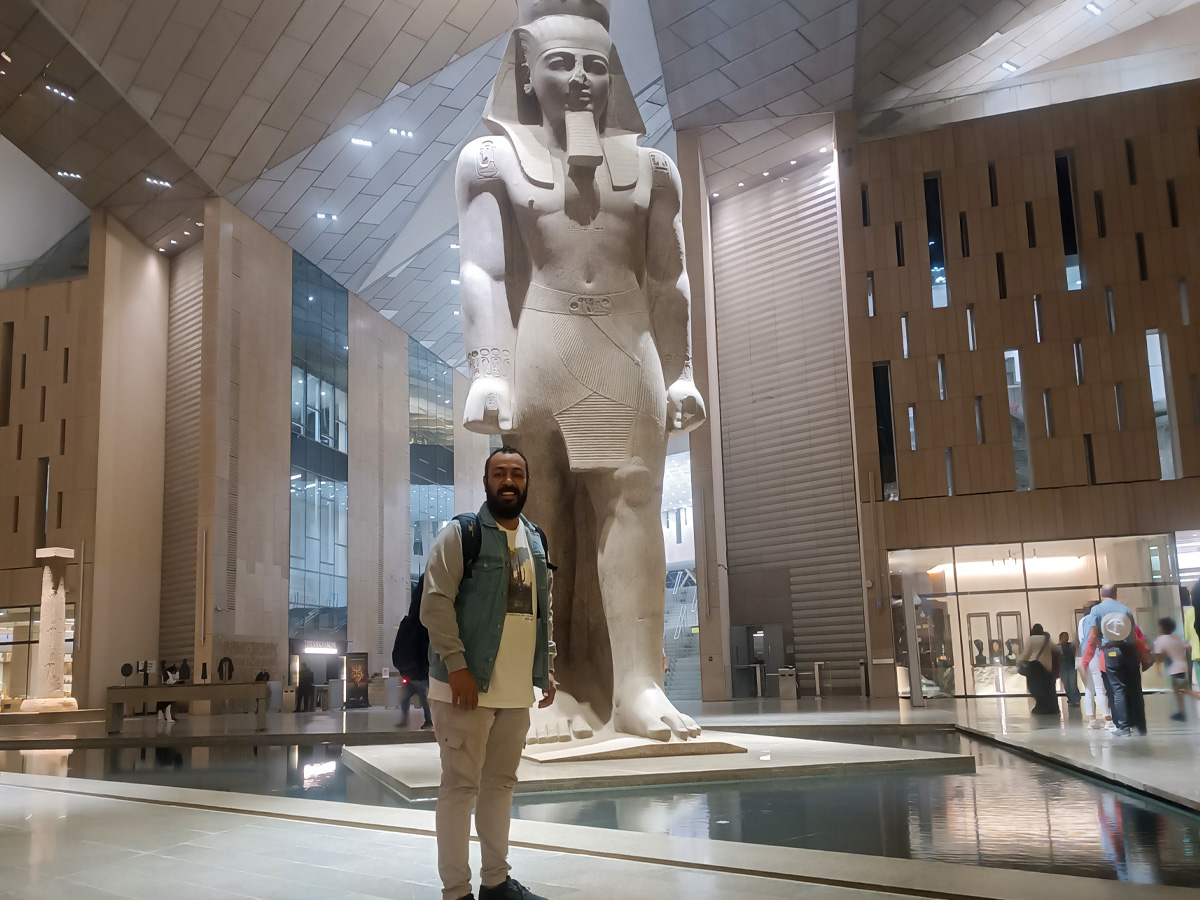
"I walked through the Grand Atrium for the first time the week it opened. The colossal Ramses II statue — 11 meters tall, 83 tonnes — stands at the center of a glass-roofed space, with the Pyramids framed in the view beyond. I have worked in and around Egypt's ancient sites for fifteen years. This still stopped me in my tracks." — Magdy Fattouh
Practical Information — Everything Before You Go
Get the logistics right before you arrive, and your visit will flow effortlessly. Get them wrong and the most common outcome is a wasted journey — the GEM's ticketing system is genuinely different from anything travelers are used to in Egypt, and it is non-negotiable.
Location and Getting There
Address: El Remayah Square, Cairo–Alexandria Desert Road, Giza.
The GEM sits at the edge of the Giza Plateau — close enough to the Pyramids that on a clear day you can see them from the museum forecourt. From central Cairo, allow 45–50 minutes by car, depending on traffic. From the Pyramids themselves, it's a 5–10 minute Uber ride.
Getting there — recommended options:
• Uber or Careem (strongly recommended): Set drop-off as 'Grand Egyptian Museum' in the app. Fare from central Cairo is approximately 80–120 EGP.
• Hotel-arranged private transfer: Most efficient, especially for early-morning timed entry slots.
• Standard taxi: Negotiate the price in advance and confirm 'Grand Egyptian Museum' as your destination.
• Public transport: No practical public transport currently serves the GEM — the metro extension remains under construction.
💡 Insider Tip: Sequence Your Giza Day Correctly If you're combining the GEM with the Pyramids on the same day, do the GEM first. Arrive for your morning timed slot, explore for 2.5–3 hours, then transfer to the Giza Plateau in the early afternoon. The Pyramids are quieter after midday, and the light for photography is far better from 2 pm onwards. This sequencing makes the whole day easier and more rewarding. |
Opening Hours
Open: Daily except Wednesday and Saturday.
Hours: Approximately 9:00 AM – 5:00 PM (last entry 3:00 PM). Always verify current hours at visit-gem.com before your visit — hours may be adjusted for public holidays.
⚠️ Important: The GEM Is Closed on Wednesdays and Saturdays This catches a significant number of visitors who do not check in advance. Before booking flights, hotels, or any tour that includes the GEM, confirm your proposed visit date does not fall on a Wednesday or Saturday. Many travelers have arrived at the gate only to find it closed. |
Tickets — The Most Important Practical Information in This Guide
There are no walk-up ticket sales at the GEM gate. As of 2026, all tickets must be booked online in advance through the official portal:
Official booking site: visit-gem.com — this is the ONLY legitimate platform. Do not use any other website.
⚠️ Scam Warning — Third-Party Ticketing Sites Multiple third-party websites impersonate the official GEM portal and charge significantly inflated prices. Some resell legitimate tickets with a heavy mark-up; others may not deliver valid tickets at all. Use visit-gem.com only. If a site is offering GEM tickets without redirecting you to the official portal, leave it immediately. |
How the timed entry system works: Each ticket is assigned to a specific entry slot — there are eight time slots per day. You must arrive within your allocated slot. Arrive late and your ticket may not be honoured. Book the earliest available morning slot for the best experience.
Booking lead time: Book 1–2 weeks in advance during peak season (October–April). In shoulder season, 3–5 days is usually sufficient — but never leave it until the day before.
Free admission: Children under 6, visitors with disabilities, and ICOM members.
Payment: Visa and Mastercard accepted online. No cash payments, no American Express.
Your ticket: You will receive a PDF ticket by email with a QR code. Save it to your phone and print a physical backup — do not rely solely on connectivity at the gate.
Quick Logistics Reference:
Detail | Information |
Open Days | Daily except Wednesday & Saturday |
Opening Hours | Approx. 9:00 AM – 5:00 PM (last entry 3:00 PM) — verify at visit-gem.com |
Tickets | Online only — visit-gem.com (timed entry slots, book 1–2 weeks ahead in peak season) |
International Adult Price | Approx. 900 EGP (~$18 USD) — verify current price at visit-gem.com before publishing |
Free Admission | Children under 6 · Visitors with disabilities · ICOM members |
Payment | Visa & Mastercard online — no cash, no Amex |
Location | El Remayah Square, Cairo–Alexandria Desert Road, Giza |
From Central Cairo | 45–50 minutes by car (Uber/Careem recommended) |
From Pyramids of Giza | Approx. 2 km — 5–10 minutes by Uber |
Photography | Mobile phones permitted throughout; no flash, no tripods, no selfie sticks |
How to Plan Your Visit — Time, Strategy, and Sequencing
The Grand Egyptian Museum is genuinely too large to see in its entirety on a single visit. This is not a limitation — it is the nature of representing 7,000 years of one of the world's greatest civilizations. Go in with a plan, and you will leave with a full, deeply rewarding experience. Go without one, and the scale can become overwhelming.
How Long Do You Need?
2.5 hours: The minimum for a meaningful visit — enough time to experience the Grand Atrium, Tutankhamun Galleries, Grand Staircase, and Khufu's Solar Boat Museum.
3–4 hours: A comfortable, unhurried visit — adds the Royal Mummies Hall, the Prehistoric Galleries, and a food break. This is the sweet spot for most travelers.
5–6 hours: For visitors who want to read and absorb every label — would still not fully cover all 24 galleries. Consider a return visit if this is your level of interest.
💡 Insider Tip: The Most Common Mistake Many visitors spend so long in the Tutankhamun Galleries — which deserve every minute — that they never reach Khufu's Solar Boat Museum before their energy runs out. Build the Solar Boat into your plan as a deliberate stop, not an afterthought. Schedule it for your final 30–45 minutes. It is one of the quietest, most extraordinary experiences in the building. |
The Best Visit Strategy
• Book the earliest timed slot available. Morning light in the Grand Atrium is exceptional, and crowds are noticeably lighter before 11 am.
• Begin in the Grand Atrium. Orient yourself to the building's scale and spend your first 20–30 minutes with the Ramses II statue and the Grand Staircase before entering any galleries.
• Go directly to the Tutankhamun Galleries. This is the primary reason most visitors come. Visit it while your energy and concentration are high.
• Let the crowds spread. After the initial entry rush, the galleries thin. If Tutankhamun feels busy, spend 20 minutes in the Prehistoric Galleries first — rarely crowded, and a perfect introduction to the full sweep of Egyptian history.
• End at Khufu's Solar Boat Museum. Quieter than the main galleries, deeply focused, and an extraordinary final experience.
• Eat after — not during — your visit. The GEM food court gets crowded by 12:30 pm. A late lunch works better than a mid-visit queue.
What to See — The Eight Must-Visit Highlights
One hundred thousand artifacts across 24 galleries. You cannot see all of it. Here are the eight things worth prioritizing in a half-day visit — from the perspective of a guide who has been inside the GEM dozens of times and watched what actually stops people in their tracks.
1. The Grand Atrium and Ramses II Statue — Your First 30 Minutes
You enter the GEM, and almost immediately, the building does something unexpected: it silences you. The Grand Atrium is a vast, glass-roofed space flooded with natural light, with the Pyramids of Giza visible through the south-facing facade — the ancient world framed inside the contemporary one. It is one of the most theatrical museum entrances on earth.
At its center stands an 11-meter, 83-tonne colossus of Ramses II — one of the largest objects in the museum, originally from Mit Rahina, the site of ancient Memphis. Walking up the Grand Staircase alongside colossal royal statues from across Egypt's dynasties, you begin to feel the scale of what this building is attempting: to give Egypt's greatest story a space worthy of it.
Above the entrance forecourt, a granite obelisk carved for Ramses II is suspended in the air, engineered to be viewed from below. Look up at it. It is one of the GEM's most quietly dramatic architectural gestures — a 3,000-year-old object, suspended in a 21st-century building, both things simultaneously real.
"The first thing most visitors do in the Grand Atrium is stop walking. The scale disarms people. A 4,500-year-old civilization is looking back at you from a building that cost over a billion dollars to house it. Both things are real simultaneously." — Magdy Fattouh
⏱ Allow: 30 minutes | 📸 Photography: freely permitted
2. The Tutankhamun Galleries — The Reason Most People Come
Tutankhamun died at nineteen. He ruled for approximately ten years, was a minor king by the standards of Egyptian history, and was nearly forgotten by the dynastic record-keepers who succeeded him. Howard Carter found his tomb in 1922 — the most intact royal burial ever discovered — and the world has been transfixed by him ever since.
The GEM's Tutankhamun Galleries display all 5,398 objects from KV62 together for the first time, organised thematically into the story of the young king's life and death. The funerary equipment. His personal possessions. The ritual objects. The golden machinery of Egyptian immortality — all of it visible, lit with extraordinary care, labeled with genuine context.
The golden burial mask — 11 kilograms of solid gold inlaid with lapis lazuli, carnelian, obsidian, and faience — is displayed on an entire wall. The lighting is designed to render the colors of the original gold. You are not looking at it through a crowd and a glass case. You are seeing it.
The golden throne — many guides' personal favorite — depicts Tutankhamun and his wife Ankhesenamun in an intimate scene: she applies perfume to his shoulder while the sun disc shines above them. The tenderness is completely unexpected inside a gallery of funerary gold. I have watched people stand in front of it for ten minutes without moving.
Six of Tutankhamun's gilded ceremonial chariots are displayed with enough space to walk around them and appreciate their true scale — something the old Egyptian Museum never had room for.
"The old Egyptian Museum had the mask in a room with forty other things. The GEM gives it an entire wall. The effect is that you are seeing it — really seeing it — for the first time." — Magdy Fattouh
⏱ Allow: 60–75 minutes minimum | 📸 Photography: Mobile phones permitted; flash, tripods, and selfie sticks are NOT permitted
💡 Insider Tip: Beat the Gallery Rush Every visitor wants to see the Tutankhamun Galleries first — which means they are busiest in the first 45 minutes after each timed slot opens. Spend your first 30 minutes in the Grand Atrium and on the Grand Staircase. Let the initial rush enter ahead of you. By the time you arrive in the Tutankhamun section, the first wave has spread out and the gallery feels noticeably calmer. Same objects. Significantly better photographs. |
3. Khufu's Solar Boat Museum — The World's Oldest Ship
Khufu's funeral boat is 4,600 years old, 43 metres long, and was constructed from Lebanese cedar without a single nail. It was dismantled and buried in a sealed pit beside the Great Pyramid of Khufu in approximately 2500 BCE, designed to carry the pharaoh's soul across the sky alongside the sun. When it was excavated in 1954, the cedar still carried a faint scent of wood. The boat was so perfectly preserved that conservators could reassemble it from its 1,224 individual pieces.
The Solar Boat Museum — relocated from its original pavilion beside the Pyramids into the GEM — now houses this extraordinary vessel in a dedicated wing. In an adjacent hall, the second Khufu boat remains under active conservation; visitors can watch the ongoing restoration through a glass wall.
"Standing next to Khufu's boat is one of the strangest feelings I know in this work. The object is older than almost anything that exists on earth. It is completely, unmistakably real. You are 4,600 years away from the hands that built it, and somehow you are in the same room." — Magdy Fattouh
⏱ Allow: 30–45 minutes | 📸 Photography: permitted
4. The Royal Mummies Hall — Egypt's Most Intimate Gallery
The Royal Mummies Hall is quiet in a way that the rest of the museum is not. People instinctively lower their voices. The gallery is climate-controlled, reverently lit, and holds the actual preserved bodies of some of ancient Egypt's most significant rulers — identities confirmed by modern DNA analysis and CT scanning.
Each mummy is displayed with extensive contextual labeling: who they were, when they ruled, what they built, and how they died. This is not a morbid spectacle. It is, unexpectedly, one of the most humanizing experiences in the building. The pharaohs were not gods. They were people. Looking at them — really looking — makes the rest of what you've seen feel suddenly, permanently different.
⏱ Allow: 30–45 minutes | 📸 Photography: permitted without flash
5. The Grand Staircase Gallery — 5,000 Years in One Walk
Eighty-seven colossal royal statues line the Grand Staircase, arranged chronologically from the Old Kingdom through to the Ptolemaic period. Walking slowly up the staircase is a physical journey through 3,000 years of Egyptian royal portraiture — watching the artistic style evolve, from the severe geometric restraint of the Old Kingdom faces to the increasingly human and expressive features of the New Kingdom. Each statue is a statement of power, belief, and craft from a different moment in a 3,000-year story.
"Walk up it slowly. Look at each face. Notice how the style changes. This staircase is a masterclass in art history, yet most visitors walk past it in three minutes. Give it twenty." — Magdy Fattouh
⏱ Allow: 20–30 minutes (longer for photography enthusiasts)
6. The Prehistoric and Early Dynastic Galleries — Before the Pyramids
Most visitors walk straight past this section on the way to the Tutankhamun Galleries. That is a loss. The Prehistoric and Early Dynastic Galleries trace Egypt's story from 700,000 BCE — long before the pharaohs, long before writing, long before the belief systems that would eventually produce the Pyramids.
Stone tools. Pre-Dynastic pottery. The first experiments in hieroglyphic writing. The earliest traces of the cosmological ideas that would become Egyptian religion. If you want to understand everything else you see in this museum — the golden thrones and the funerary masks and the colossal statues — come here first. These galleries show you where it all began.
⏱ Allow: 20–30 minutes
7. Daily Life in Ancient Egypt — The Human Story
The pharaohs built the monuments. The other ninety-five percent of Egypt built the pharaohs' world. The Daily Life galleries are filled with the possessions of farmers, craftsmen, merchants, scribes, children: tools, clothing, jewelry, games, food containers, musical instruments, wooden toys.
The wooden toys from ancient Egypt are consistently one of the most unexpected exhibits in the museum. A carved wooden crocodile with a moving jaw. A set of small dolls. Objects that are 3,500 years old and completely recognizable to any child alive today. The royal galleries show you what Egypt believed. The daily life galleries show you how Egypt lived. Both are essential.
⏱ Allow: 20 minutes
8. The GEM's Architecture Itself — A Building Worth Noticing
Designed by the Irish firm Heneghan Peng Architects, winners of an international competition in 2002, the GEM is not just a container for Egypt's treasures — it is itself a statement. The exterior translucent stone panels filter natural light into the galleries; the wall literally glows during daytime hours. The geometric form of the building references the Pyramids. The scale is designed to be read as a contemporary monument from the plateau.
Do not leave without finding the conservation center: a glass-walled laboratory where visitors can watch GEM conservators treating and restoring artifacts in real time. The objects being worked on change regularly — a small shabti one visit, a large stone fragment the next. It is one of the quietest and most extraordinary experiences in the building: the living, ongoing act of protecting Egypt's past, visible through a window, with no performance and no commentary.
💡 Insider Tip: Find the Conservation Window Most visitors never find the conservation laboratory viewing window — it's in a quieter corridor and not prominently signposted. Ask a staff member to point you towards it. It's one of those rare museum moments that has no theatrical presentation and is entirely, unexpectedly real: conservators working on ancient objects, visible through glass, as if you happened to look through the right window at the right time. |
Photography at the GEM — What's Allowed and What Isn't
The photography rules at the GEM differ from those at traditional Egyptian sites, and visitors regularly get them wrong. Here is the simple version, clearly stated:
✅ Permitted • Mobile phones and personal cameras throughout most galleries • Photography in the Tutankhamun Galleries — mobile phones permitted (verify dedicated cameras policy at visit-gem.com before publishing) • No flash — photography without flash is permitted throughout | ❌ Not Permitted • Flash photography — prohibited throughout the entire museum • Tripods and selfie sticks — confiscated at security • Drones — strictly prohibited • Commercial photography and live streaming — requires written permission from museum management |
📸 Best Light for Photography The GEM's lighting is genuinely exceptional — particularly in the Grand Atrium and around the statues on the Grand Staircase. Shoot in the first hour of your visit for the best combination of natural light and lighter crowds. The glass ceiling in the Atrium creates beautiful, even illumination in the morning. |
Eating at the GEM — Where and When
The GEM's food and commercial area is considerably better than museum catering has any right to be. The options are genuinely good — the timing, however, is everything.
• Zooba: Excellent Egyptian street food — ta'meya bowls, koshari-style dishes, fresh juices. Consistently the most popular option and worth every queue.
• 30 North and Beano's: Good coffee and lighter bites — ideal for a mid-visit break without losing too much time.
• Ladurée: French pastry café — for those wanting something a little more unhurried and luxurious.
• Starbucks: Familiar option for international visitors who need a reliable coffee between galleries.
The timing rule: Lines at Zooba and the coffee spots start building by 12:30 pm. Either eat early (before the midday rush) or exit the main galleries and eat afterward. Do not sacrifice museum time to queue for lunch in the middle of your visit — the collection deserves your full attention while you're fresh.
The museum shop is worth a visit on the way out — a well-designed selection of books, reproductions, jewelry, and gifts, considerably better quality than most Egyptian souvenir shops.
GEM vs. Old Egyptian Museum — Which Should You Visit?
This is the question most Cairo visitors ask — and almost never get a direct answer to. Here is a direct answer.
| Grand Egyptian Museum | Old Egyptian Museum (Tahrir) |
Location | Giza Plateau — 2km from the Pyramids | Tahrir Square, downtown Cairo |
Opened | November 2025 (fully) | 1902 |
Collection Size | 100,000+ artefacts across 24 galleries | Approx. 120,000 items (many in storage) |
Tutankhamun | All 5,398 objects — complete for first time | Fewer than 1,800 previously displayed |
Lighting & Labelling | State-of-the-art — excellent for all visitors | Older, dimmer — adds atmosphere; labels vary |
Khufu's Solar Boat | Yes — dedicated museum wing | No |
Royal Mummies | Yes — dedicated, reverently lit gallery | Small dedicated room, separate ticket |
Ticket Booking | Online only — timed entry at visit-gem.com | Can purchase on-site (check current policy) |
Best For | First-timers, history buffs, and anyone with one day | Return visitors; Egyptology enthusiasts; atmosphere |
Verdict | Priority for all visitors | Add-on if you have a second Cairo day |
The honest verdict: If you can visit only one, visit the GEM. It houses the complete Tutankhamun collection, Khufu's Solar Boat, better lighting, better labeling, and a more coherent and moving visitor experience than anywhere else in Egypt.
The old Egyptian Museum at Tahrir Square has a charm the GEM cannot replicate — its beautiful 1902 pink building, the slightly eccentric organization, the sense that you've stumbled into the 19th-century discovery of Egypt. It retains artifacts not yet transferred to the GEM and is worth visiting if you have a second full Cairo day and a genuine interest in Egyptology.
“The GEM is what Egypt deserves in 2026. The old museum has its own irreplaceable atmosphere. Choose the GEM if you’re choosing one — and if you have time for both, do not hesitate.” — Magdy Fattouh
→ Internal link: Things to Do in Cairo (Post #7)
The Perfect Giza Day — GEM + Pyramids in One Visit
The most common scheduling question about the GEM: Can I combine it with the Pyramids in a single day? Yes — and this is exactly the recommended approach. The two sites are 2km apart. Sequenced correctly, the combination makes for one of the most extraordinary days available anywhere in the world.
Time | Activity |
9:00 AM | Arrive at GEM — first timed entry slot. Grand Atrium + Ramses II Statue. |
9:30 AM | Tutankhamun Galleries — golden mask, golden throne, ceremonial chariots. |
11:00 AM | Grand Staircase Gallery + Royal Mummies Hall. |
12:00 PM | Khufu's Solar Boat Museum. Food break at Zooba or Beano's. |
1:30 PM | Uber transfer to Giza Plateau (~5 minutes). |
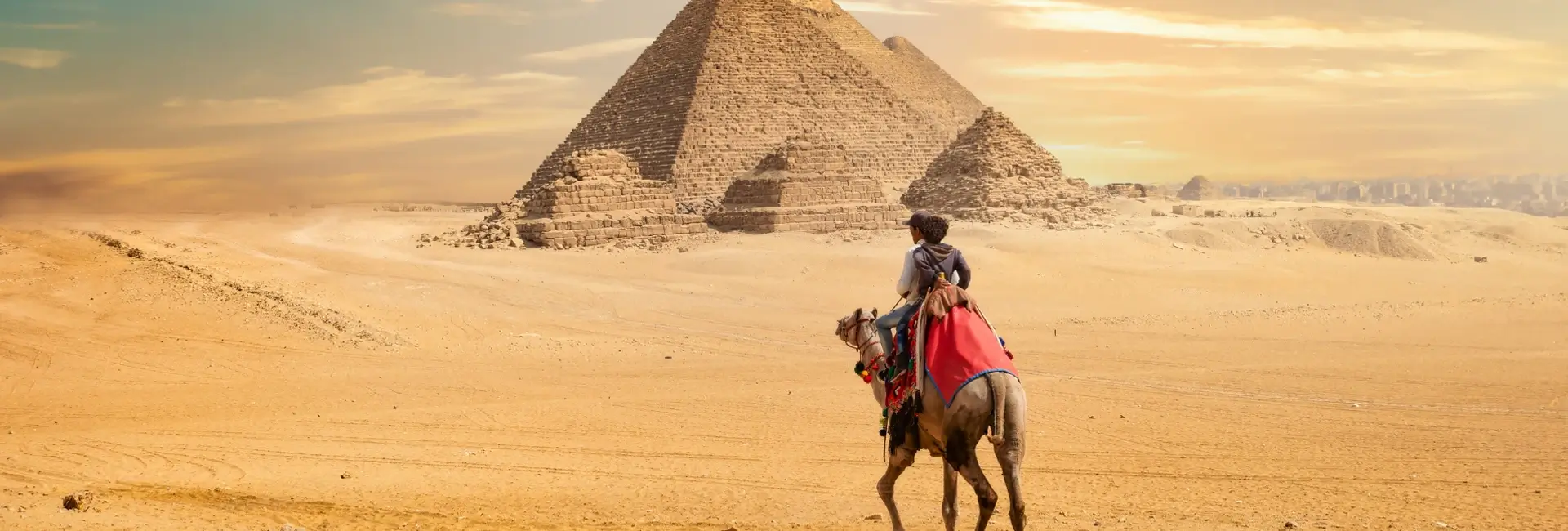
2:00 PM | Great Pyramids of Giza — afternoon light is ideal; morning crowds have cleared. |
4:00 PM | The Great Sphinx — best photographed in late afternoon when shadows deepen across its face. |
5:00 PM | Optional: Pyramids Sound & Light Show (check current schedule). |
"This is the day that leaves visitors most speechless. You begin in the world's greatest new museum and end standing in front of the world's oldest surviving wonder. The GEM and the Pyramids are two chapters of the same story — and one well-planned day is enough to read both." — Magdy Fattouh
→ Internal link: Egypt Itinerary 10 Days (Post #5)
Ready to Visit the Grand Egyptian Museum?
The Grand Egyptian Museum is the most important development in Egypt tourism in a generation — a museum worthy of the civilization it represents. The Tutankhamun collection alone justifies a journey from anywhere on earth. Add the Solar Boat, the Royal Mummies, the Grand Staircase, and the building itself, and you have a full day that will stay with you for the rest of your life.
Book your tickets online at visit-gem.com well before your arrival in Cairo — ideally 1–2 weeks ahead in the high season. Do not leave it to chance.
📲 Plan Your Perfect Giza Day with Us Want us to prearrange your GEM tickets, a private Egyptologist guide, and your visit to the Pyramids into one seamless, unforgettable day? Our Cairo-based team handles every detail — from timed entry to transfer timing to after-hours access. Contact us directly on WhatsApp: https://wa.me/201002135997 |
Frequently Asked Questions — Grand Egyptian Museum 2026
Q1: Is the Grand Egyptian Museum open in 2026?
Yes — the Grand Egyptian Museum opened fully in November 2025, and all galleries are now operational, including the complete Tutankhamun Galleries, the Royal Mummies Hall, Khufu's Solar Boat Museum, and all 24 permanent galleries. The museum is open daily except Wednesdays and Saturdays. All tickets must be booked online in advance through the official portal at visit-gem.com — no walk-up ticket sales are available at the gate.
Q2: How much are Grand Egyptian Museum tickets in 2026?
Standard admission for international visitors is approximately 900 EGP (about $18 USD) based on current research; however, ticket prices should always be verified on the official booking portal, visit-gem.com, before publishing or communicating to travelers, as pricing is subject to change. Free admission applies to children under 6, visitors with disabilities, and ICOM members. Private guided tours are arranged separately through licensed tour operators.
Q3: How long should I spend at the Grand Egyptian Museum?
Allow a minimum of 2.5 hours for a focused visit covering the Grand Atrium, Tutankhamun Galleries, Grand Staircase, and Khufu's Solar Boat Museum. A comfortable, unhurried visit takes 3–4 hours. Those wishing to engage deeply with all 24 galleries should allow 5–6 hours or plan a return visit. Morning timed slots offer the best atmosphere and the lightest crowds.
Q4: Can I visit the Grand Egyptian Museum and the Pyramids on the same day?
Yes — this is the recommended Giza day plan. Visit the GEM first with an early timed entry (9:00 AM), explore for 2.5–3 hours, take a food break, then transfer to the Giza Plateau by Uber — approximately 5 minutes. Arriving at the Pyramids around 1:30–2:00 PM gives you excellent afternoon light for photography and fewer morning crowds. The combination is completely manageable and deeply rewarding.
Q5: What is the Tutankhamun collection at the Grand Egyptian Museum?
The Tutankhamun Galleries at the GEM display all 5,398 objects discovered in Tutankhamun's tomb (KV62) by Howard Carter in 1922 — together in a single space for the first time in history. Previously, fewer than 1,800 items were shown at the old Egyptian Museum; the rest were in storage. Highlights include the iconic golden burial mask, the golden throne, six ceremonial chariots, and the nested sarcophagi. Mobile photography is permitted in the galleries; flash and tripods are not.
Q6: Should I visit the Grand Egyptian Museum or the Old Egyptian Museum in Cairo?
If you can visit only one, visit the GEM. It houses the complete Tutankhamun collection, Khufu's Solar Boat Museum, the Royal Mummies Hall, and offers superior lighting, labelling, and visitor flow compared to any other museum in Egypt. The old Egyptian Museum at Tahrir Square remains historically significant and atmospheric, and retains some artefacts not yet transferred to the GEM — but for first-time visitors on a standard itinerary, the GEM is the clear priority.