Fifteen years ago, a British woman arrived at Cairo airport with a look I've come to recognize — half excitement, half genuine terror. She had read everything online. She had printed the State Department advisory. She had told her parents she'd text them every six hours.
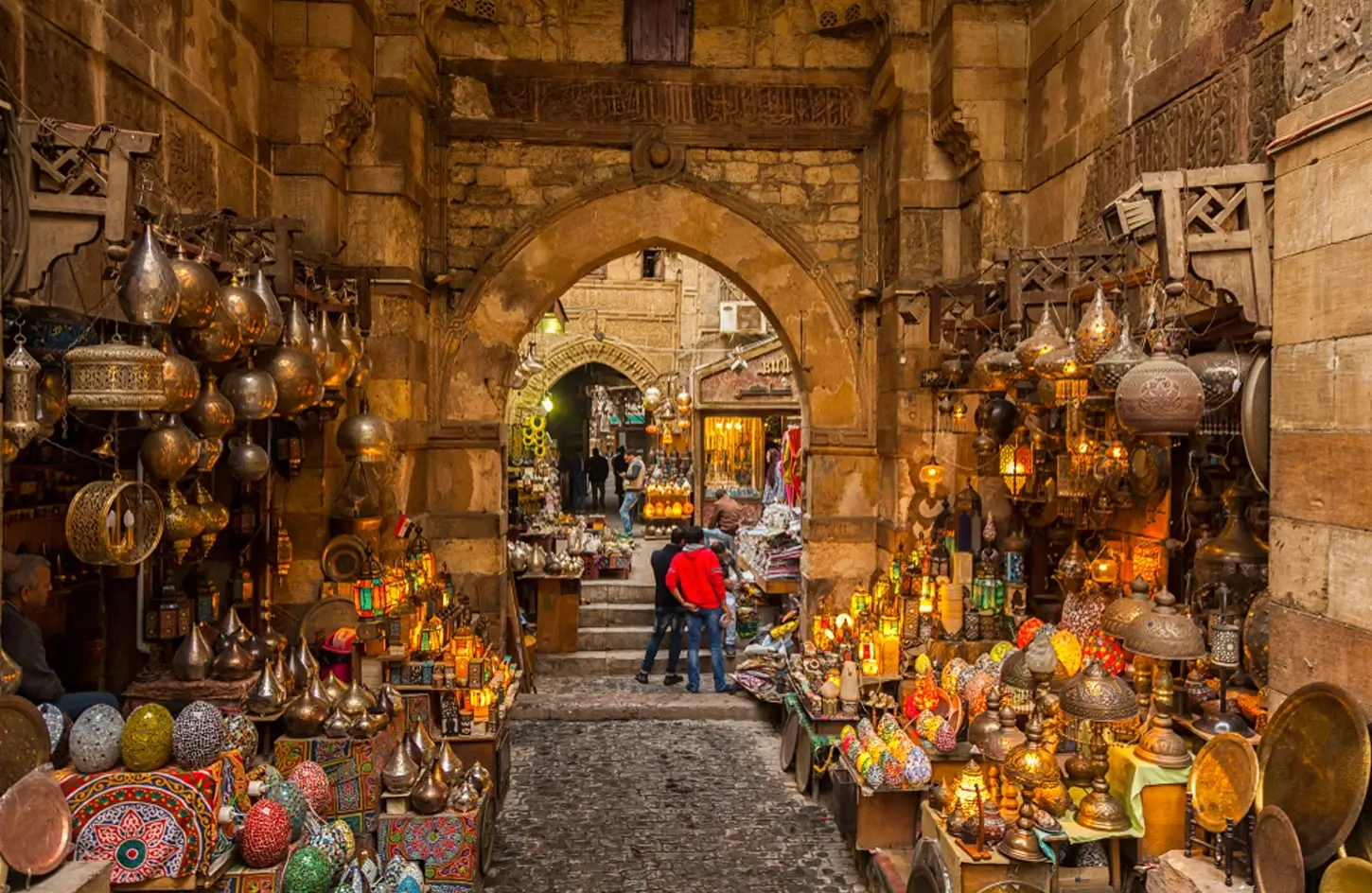
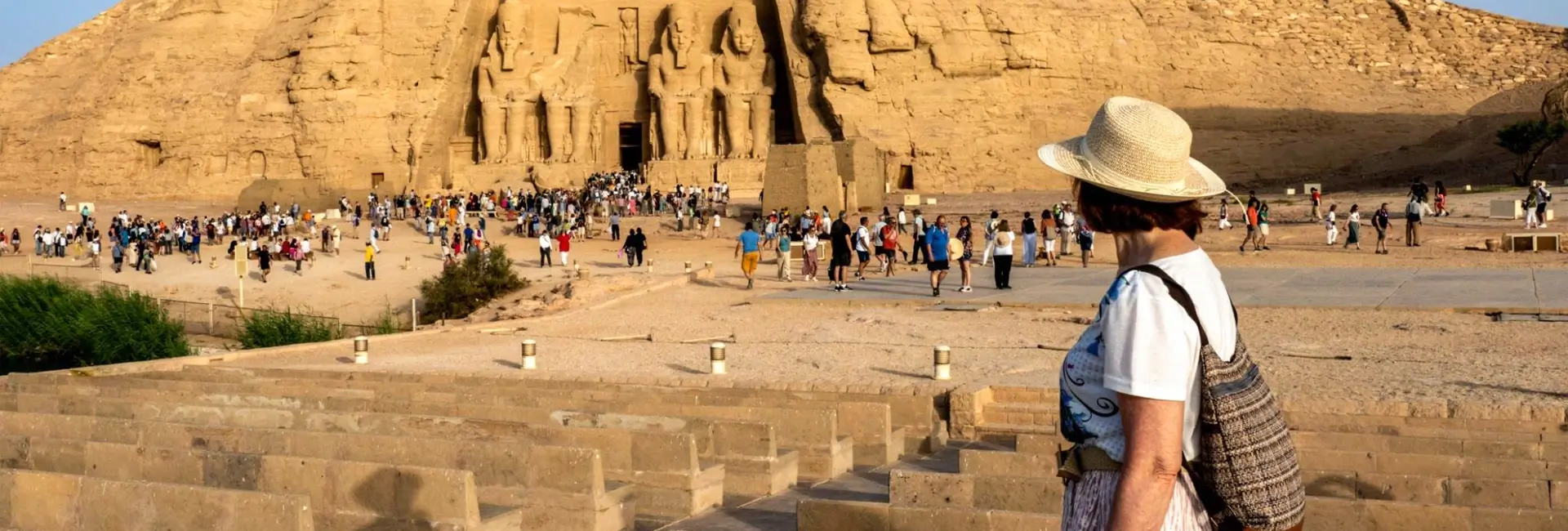
She spent ten days in Egypt. She stood at Abu Simbel at dawn and cried. She haggled in Khan el-Khalili and won. She had tea with a Nubian family in Aswan. She ate kushari standing on a street corner in Cairo and said it was the best thing she'd ever tasted.
On her last day, she told me, "I was so frightened before I came. And now I'm frightened about leaving."
I've told that story hundreds of times — because it captures something true about Egypt's safety that no government advisory or travel blog ever quite manages to say. The gap between the fear of Egypt and the reality of Egypt is one of travel's most significant mismatches. This guide exists to close that gap. Honestly. Completely. Without the spin in either direction.
The Short Answer — Yes, With Context
Egypt is generally safe for tourists in 2026, particularly in the established tourist corridor — Cairo, Luxor, Aswan, and the Red Sea resorts. Millions of visitors travel here every year without incident. That is the honest first answer to the question "is Egypt safe for tourists?" and it deserves to be said clearly before anything else.
The honest caveat: Egypt is not without risk, and certain areas require specific caution or should be avoided entirely. The gap between perception and reality runs in both directions — some people are needlessly terrified, and others are needlessly reckless. Neither serves the traveler well.
What I offer in this guide is different from the tour operator's "it's perfectly safe!" and from the scare-mongering of outdated travel blogs. I was born in Cairo. I've been guiding visitors through this country for fifteen years. I have watched the vast majority of them leave completely safe, having had the trip of their lives. Here is the honest picture.
📊 Quick Safety Overview — Egypt for Tourists 2026
Category | Risk Level | Notes |
Violent crime targeting tourists | Low | Rare in tourist zones; not a defining feature of Egypt travel |
Petty theft/pickpocketing | Medium | Crowded markets and busy sites; manageable with awareness |
Scams and overcharging | Medium–High | Very common at major sites; booking with an agency eliminates most |
Traffic safety | Medium–High | Hire private drivers; do not self-drive in Egyptian cities |
Street harassment (women) | Medium | Dress modestly, travel with a guide, use Uber over street taxis |
Terrorism in tourist zones | Low–Medium | Tourist sites are heavily secured and well-monitored |
North Sinai / border regions | HIGH | Avoid entirely — Level 4 Do Not Travel advisory from the US, UK, and Canada |
The Tourist Zones — Where Egypt's Safety Story Is Genuinely Positive
Let me start with the good news, because it is genuine and it is substantial. The Egyptian government treats tourism as a national economic priority — and tourist security receives significant investment as a direct consequence. This is not marketing language. You will feel it from the moment you pass through your first security checkpoint.
Every major tourist site — the Pyramids at Giza, the Valley of the Kings, Karnak Temple, Luxor Temple, Abu Simbel, Philae — has a dedicated force of tourist police stationed permanently on site. X-ray scanning at all major temple entrances, bag searches at hotel lobbies, security presence on the highways connecting tourist cities. The infrastructure of tourist protection in Egypt is real, visible, and constant.
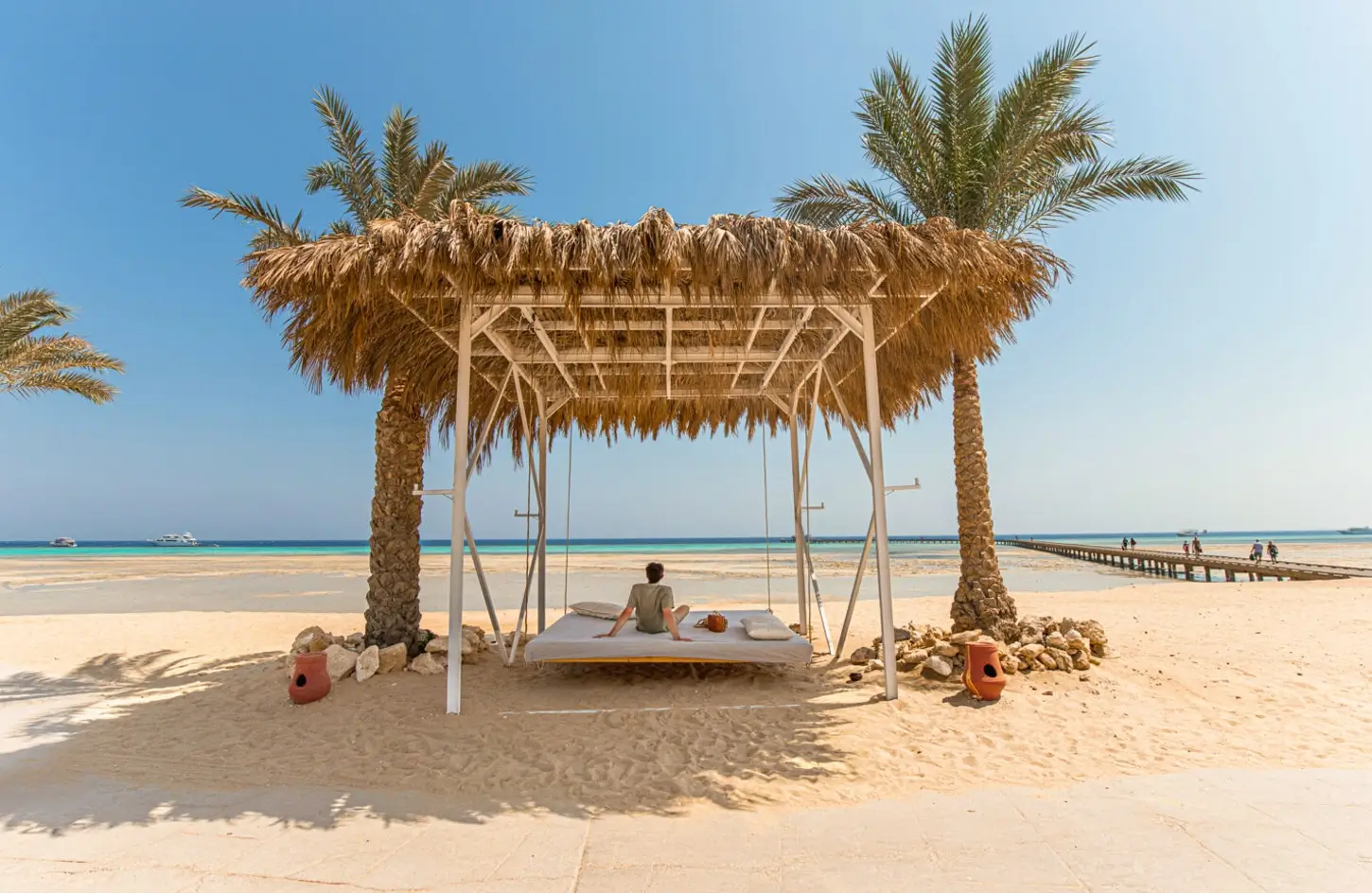
The main tourist cities — Cairo and Giza, Luxor, Aswan, Hurghada, and Sharm el-Sheikh — are all heavily monitored and built around mature tourism infrastructure. The Nile cruise route between Luxor and Aswan is well patrolled and has seen no significant security incidents along the established tourist corridor for many years.
A context check I offer every visitor who asks me about Egypt's safety: violent crime rates in Egypt's tourist zones compare favorably with those in major tourist cities in Europe and North America. The Pyramids plateau has more security cameras and tourist police per square meter than most European landmark squares. This fact matters, and it rarely gets mentioned.
💡 Insider Perspective — What Fifteen Years on the Ground Looks Like I have brought thousands of visitors through the Valley of the Kings, through Khan el-Khalili at its most chaotic, along the Nile from Luxor to Aswan. In fifteen years of guiding, I have never once felt a visitor in genuine physical danger in the tourist corridor. The security presence is constant and visible. What tourists encounter here is not danger — it is an unfamiliar environment, which is a very different thing. |
Government Travel Advisories — What the Official Guidance Actually Says
Government travel advisories are one of the most misread documents in travel planning. People see a warning level and assume the worst. The reality is more nuanced — and understanding what these advisories actually say is one of the most useful things you can do before booking your Egypt trip.
📊 Government Advisory Comparison — Egypt 2026
Country | Overall Egypt Rating | North Sinai Rating | Tourist Corridor |
🇺🇸 United States | Level 2 — Exercise Increased Caution | Level 4 — Do Not Travel | Tourist corridor (Cairo, Luxor, Aswan, Red Sea) not in restricted zone |
🇬🇧 United Kingdom | Some parts: Advice Against Travel | All travel: Advise Against | Main tourist areas are outside the restricted zones |
🇨🇦 Canada | High Degree of Caution (overall) | Avoid all travel | Mainstream itineraries stay well clear of North Sinai |
🇦🇺 Australia | Exercise a high degree of caution | Do not travel | Sinai Peninsula east of the Suez Canal (excl. Sharm airport area) |
The US State Department's Level 2 advisory — "Exercise Increased Caution" — is the same rating currently applied to France, Germany, Italy, the Bahamas, and dozens of other mainstream tourist destinations. It does not mean 'don't go.' It means be aware, be prepared, and stay informed.
The North Sinai advisory is a different matter entirely. The Level 4 'Do Not Travel' rating for North Sinai is genuine, serious, and well-founded. Active security operations against militant groups have been ongoing in that region since 2013. But here is the critical distinction: North Sinai is not on any standard Egypt tourism itinerary. If your trip covers Cairo and the Pyramids, a Nile cruise from Luxor to Aswan, and perhaps the Red Sea at Hurghada, you will not be near North Sinai. The map's geography makes this clear once you look at it.
⚠️ Important — Check Your Own Government's Advisory Before You Depart Advisory levels can and do change. Always check the current advisory from your own government's foreign affairs website in the week before departure — not just at the booking stage. The links that matter: US State Department (travel.state.gov), UK FCDO (gov.uk/foreign-travel-advice/egypt), Government of Canada (travel.gc.ca), Australian Smartraveller (smartraveller.gov.au). |
Areas to Avoid — Being Specific and Honest
This is the section that requires the most clarity. I have no interest in softening this information to encourage bookings. If there are places in Egypt you should not go, you need to know precisely where they are and precisely why. Here is the honest picture.
North Sinai — Do Not Travel
I will say this without hedging: North Sinai is the one area in Egypt where I would tell any visitor, categorically, do not go. Active security operations against Islamist militant groups have been ongoing since 2013 following the ousting of President Morsi. Multiple governments — including the US, UK, Canada, and Australia — issue their highest-level 'Do Not Travel' advisories for this region.
The essential distinction that causes enormous confusion: South Sinai is not North Sinai. Sharm el-Sheikh, Dahab, St. Catherine's Monastery, and Mount Sinai are all located in South Sinai, which has its own separate advisory status and is generally considered safe for tourists who fly directly into Sharm el-Sheikh International Airport. If you visit South Sinai, fly in directly. Do not attempt overland travel through the north of the peninsula.
Within 50km of the Libyan Border — Avoid
This is a remote desert region with no tourist infrastructure and a documented presence of armed groups and smuggling activity along the porous western border. No leisure traveler has any reason to be in this zone. The main Western Desert oases — Siwa, Bahariya, Farafra, Dakhla, and Kharga — are all safe for properly organized tours with licensed operators and required permits, and all are located well away from the restricted border zone.
Areas Near the Sudan Border — Avoid Independent Travel
Military zones in the far south near the Wadi Halfa border crossing are off-limits to independent travelers. There are no tourist sites in this area. Abu Simbel — which sits approximately 280 kilometers south of Aswan — is well within the safe tourist zone and is accessible either by domestic flight or via the organized police convoy that departs from Aswan in the early morning. It is one of the most magnificent experiences Egypt has to offer, and it is entirely accessible.
The Real Day-to-Day Risks — What Actually Happens
When people ask me about safety in Egypt, they are usually imagining a dramatic risk — terrorism, violent crime, political unrest. The honest picture is more mundane, and therefore more useful. Here is what visitors actually encounter in day-to-day travel in Egypt.
Scams at Tourist Sites — The Most Common Issue
The most frequent 'safety' issue tourists face in Egypt is not crime. It is the well-organized, decades-old scam ecosystem that exists around major tourist sites. These scams are often clever, occasionally frustrating, and almost never physically dangerous. Understanding them in advance is the most effective protection.
📊 Common Scams in Egypt — Recognition and Response
Scam | Where | How It Works | Your Response |
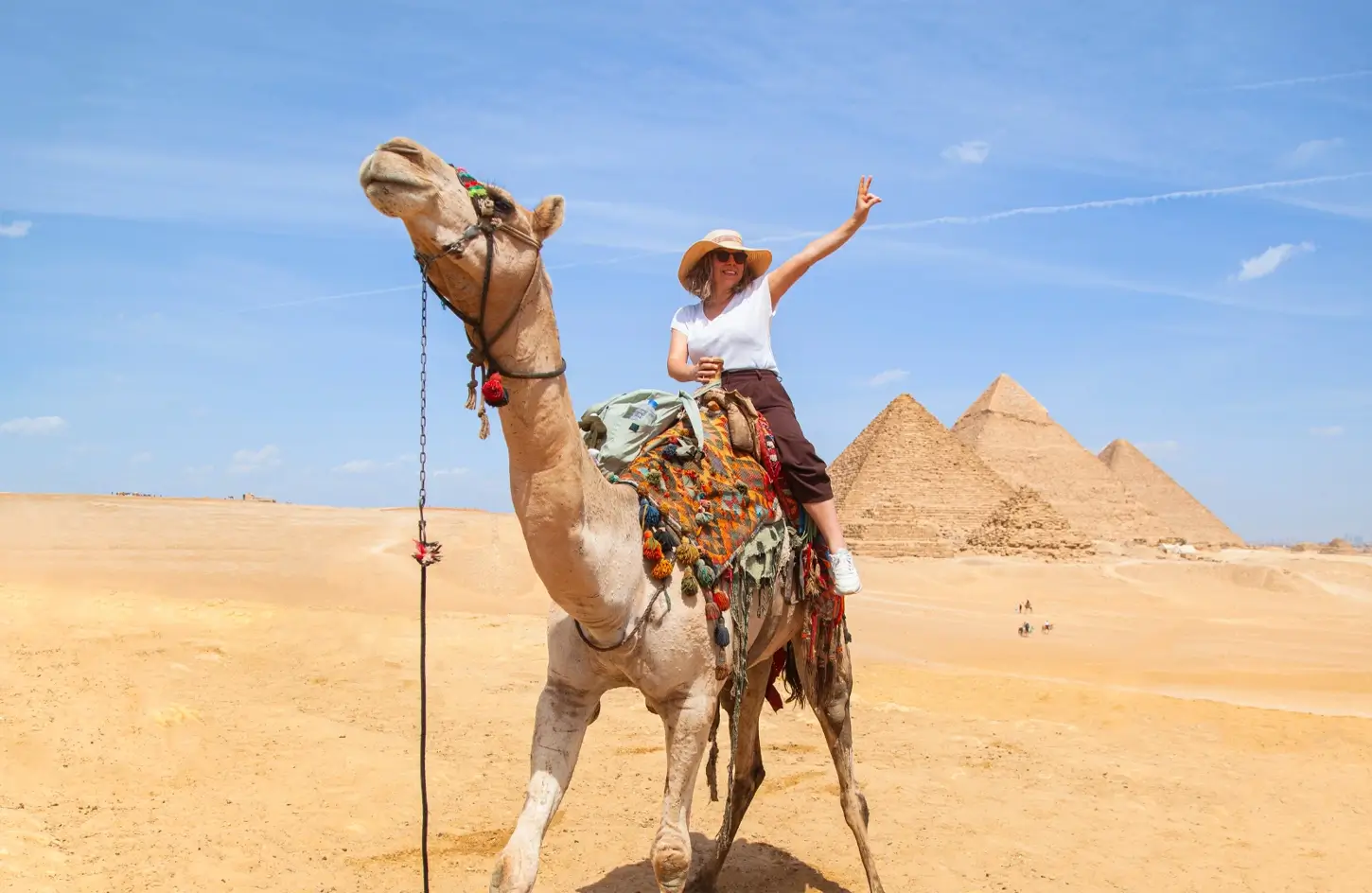
"Free" camel or horse ride | Pyramids plateau | You are helped onto the animal; a large fee is demanded before you can dismount | Agree the price in writing before you mount — or decline entirely and keep walking |
Unofficial "guide" approach | All major sites | A friendly local claims to work at the site and offers to show you around | Licensed guides wear official ID lanyards. Decline politely and keep moving |
"Secret entrance" to pyramids | Giza plateau | Claims to know a special access route — leads instead to a carpet shop or vendor | "La, shukran." No eye contact, no engagement, walk purposefully |
Broken taxi meter | Cairo streets | Driver claims the meter is broken and negotiates an inflated price after arrival | Use Uber exclusively in Cairo — fixed price, GPS-tracked, no negotiation |
"Free" gift, then tip demand | Temples, markets, sites | Vendor places an item in your hand unprompted, then demands payment or a tip | Never accept items from strangers. Return immediately and walk away |
Papyrus shop framed as a museum | Cairo / Luxor tourist zones | Establishment presents itself as a cultural institution; it is a commercial shop | Book all excursions through your licensed agency; avoid unsolicited 'tours' |
💡 Insider Tip — The Scam Immunity Secret The single most effective protection against every scam in Egypt is a private Egyptologist guide who is with you at every site. When you walk into the Pyramids complex with a guide wearing an official ID lanyard, holding your pre-purchased tickets, the scam ecosystem collapses around you. Unofficial vendors target people who look unattached and uncertain. A booked guide makes you invisible to them. This is not a sales pitch — it is a fifteen-year observation. Scams in Egypt are annoying. Some are very clever. None are violent. Agree the price of everything before you commit, and book your tours through a reputable agency — these interactions become someone else's problem. |
Petty Theft — Manageable With Awareness
Pickpocketing does occur in crowded areas — Khan el-Khalili bazaar, the crowds around the Sphinx viewing area, the Cairo metro during peak hours. It is the same risk you would manage in any major global tourist city. Keep your phone and wallet in front pockets or a zipped bag worn at the front. Don't display expensive cameras or jewellery conspicuously in busy markets. Uber reduces taxi-related incidents significantly.
In fifteen years of guiding, I can count on one hand the number of visitors who had items genuinely stolen. It happens — as it happens in Paris, Barcelona, New York, and Rome. It is manageable with basic, familiar awareness.
Traffic — Egypt's Most Consistent Physical Risk
I want to be direct about this, because it is the risk that is most genuinely underestimated. Egypt's roads have a high accident rate. The US State Department specifically flags road safety in its advisory on Egypt. Traffic rules exist in Egypt — they are simply observed very loosely, particularly in Cairo, where the sheer volume of vehicles operating in close proximity creates conditions that most Western visitors find genuinely alarming.
⚠️ The Traffic Rule — Non-Negotiable Do not rent a car and self-drive in Egypt. I drive in Cairo every day of my life. I would not recommend it to a visitor for any amount of money. Use Uber in cities — fixed price, GPS-tracked, air-conditioned. Use hotel-arranged private drivers for day trips. Use domestic flights (EgyptAir) for Luxor to Aswan and Cairo to Aswan legs if time is short. Egyptian traffic is the most consistently dangerous element of an Egypt trip. Hire a driver. Always. |
Photography Restrictions
Egypt's photography laws are enforced and are worth understanding clearly before you point a lens at anything interesting. It is illegal to photograph military installations, police stations, bridges, government buildings, border infrastructure, and certain public utilities. At temples and museums, specific areas prohibit photography — signage is present; obey it. Always ask before photographing people in residential areas — this is a question of basic respect as much as safety, and it is almost always welcomed.
Demonstrations and Political Gatherings
Avoid all protests and political gatherings — even as a bystander. This is not a theoretical caution. Egypt's current political environment means that individuals have been detained simply for being present in the vicinity of demonstrations. If you encounter a crowd with political signs or chanting, leave the area immediately by whatever route takes you away from it. This rule has real consequences and requires no qualification.
Solo Female Travel in Egypt — The Honest Picture
I am going to address this section with the honesty it deserves, because solo female travelers asking about Egypt's safety deserve a guide who tells them the truth — not a tour operator who minimizes their concerns to close a booking, and not an anxious travel blogger who catastrophizes based on a single uncomfortable afternoon.
Street harassment is a documented reality for women in Egypt. Verbal comments, persistent unwanted attention, and occasionally unwanted physical contact are reported by female visitors — particularly in crowded urban areas and busy tourist sites. Foreign women often receive more unsolicited attention than local women. This is real, it is worth preparing for, and it does not make Egypt the wrong destination.
Egypt has strengthened laws against harassment in recent years. Tourist areas have a strong police presence. The vast majority of harassment is verbal and, while genuinely unpleasant, is not dangerous in the physical sense. The women I have guided who had the best solo experiences were those who came prepared, dressed appropriately, and had a local contact they could rely on.
Practical guidance for solo female travelers in Egypt:
• Dress modestly in cities and markets — shoulders and knees covered significantly reduces unwanted attention. At Red Sea resorts, normal beachwear is entirely acceptable within resort boundaries.
• Travel with a guide or in a small group, especially at busy sites — this is the single most effective reduction strategy.
• Use Uber rather than street taxis; sit in the back seat and keep conversation minimal.
• Avoid isolated areas after dark; stick to hotel areas, restaurants, and corniche promenades in the evening.
• Cairo metro has dedicated women-only carriages — use them during peak hours.
• A firm 'la' (no) delivered with purposeful walking and no eye contact discourages persistence more effectively than any other response.
💡 From the Guide — The Preparation Difference Can solo women travel safely in Egypt? Yes. But it requires an awareness and preparation that isn't necessary in every destination. That is honest, and it is useful. The good news: preparation is straightforward. A modest outfit, a reliable Uber account, a reputable agency as your local contact, and the confidence to say 'la shukran' and keep walking — these change the experience entirely. |
Family Travel Safety in Egypt
Egypt with children is, in my experience, one of the warmest travel experiences a family can have. Egyptian culture is deeply and genuinely welcoming to children — not in the polite, European sense of tolerating small people in restaurants, but in the whole-hearted, expressive, joyful way that turns a child into the centre of every room they enter. Families with young children receive exceptional hospitality from locals across the country.
The main tourist sites are accessible and manageable for families with children aged five and above. The Nile cruise format is particularly excellent for families — a contained, structured, comfortable environment with a pool on board, meals handled, and the temples brought to you one by one. No logistics, no traffic navigation, no meals to source in unfamiliar environments.
Key family safety considerations for Egypt travel:
• Heat management — keep children hydrated, use hats and sunscreen, avoid midday outdoor exposure in summer (June–August). The best family months are October through April.
• Food and water — bottled water only, always. Be more selective about street food for younger children than you might be for yourself.
• Crowded sites — keep a close grip at the Pyramids and Khan el-Khalili, where crowds can be dense and disorientating. Pre-purchased skip-the-queue tickets reduce bottleneck pressure.
• Traffic — hire private transport for all intercity and day trip movements. Never allow children to cross Cairo streets independently.
LGBTQ+ Travel in Egypt — What You Need to Know
I want to address this with the same honesty I've applied throughout this guide. LGBTQ+ travelers deserve accurate, current information — not a diplomatic evasion.
Egypt does not have specific laws criminalizing homosexuality, but same-sex relations have been prosecuted under 'debauchery' legislation, and such prosecutions have occurred. Social attitudes across Egypt are predominantly conservative, rooted in both Islamic and traditional cultural values. Public displays of affection between same-sex couples are inadvisable and carry real legal and social risks.
LGBTQ+ travelers do visit Egypt every year without incident — the key condition being the exercise of full discretion in all public contexts: hotels, tourist sites, streets, restaurants, and transportation. Be aware that the social and legal environment differs fundamentally from that in Western Europe, North America, and Australia.
My honest advice: research the current situation thoroughly before booking, check your own government's LGBTQ+ travel advisory for Egypt, and consider joining an organized tour with professional local support throughout your visit. A reputable local agency provides a layer of logistics management and local knowledge that is particularly valuable in this context.
Health Safety — What to Prepare For
A brief but important section — the health considerations that specifically affect travel confidence and day-to-day safety in Egypt.
• Stomach issues: ,[object Object]Traveller's diarrhoea — locally known with affection as 'Pharaoh's Revenge' — affects a significant minority of first-time visitors. The prevention is simple: drink only bottled water, without exception, including when brushing teeth, and be selective about street food. See the Egypt Packing List (Post #11) for the recommended medical kit.
• Medical facilities: ,[object Object]Good private hospitals and clinics in Cairo, Luxor, Aswan, Hurghada, and Sharm el-Sheikh. Outside these centers, medical infrastructure is limited. Go directly to a private hospital in the nearest major city for anything serious — do not rely on public hospital capacity.
• Vaccinations: ,[object Object]No mandatory vaccinations for most nationalities. Hepatitis A and Typhoid are recommended by most travel medicine physicians. Check with your doctor 4–6 weeks before departure.
⚠️ The Single Most Important Egypt Preparation Step Buy comprehensive travel insurance with medical evacuation cover. This is not optional in Egypt — it is the most important financial decision in your trip planning after booking the flights. Ambulances are unreliable and slow across much of the country. Medical evacuation insurance is the difference between a manageable crisis and a catastrophic one. Do not travel to Egypt without it. |
The Guide's Honest Overall Verdict
Egypt is safe for mainstream tourism in 2026. That is not a sales pitch — it is the conclusion I would give to my own family members if they asked me. The tourist corridor — Cairo, Luxor, Aswan, the Red Sea — functions extremely well for the millions of visitors who travel through it every year.
The risks that exist are manageable with preparation. Use a licensed guide with an official ID lanyard. Book with a reputable local agency. Use Uber in cities and hire private drivers for day trips. Dress modestly when outside resort areas. Stay away from North Sinai, the Libyan border zone, and any political demonstration. Carry comprehensive travel insurance with medical evacuation cover. These are not burdensome precautions — they are the standard operating procedure of a well-planned Egypt trip.
The risks that are real — scams, occasional harassment, chaotic traffic — are common to many global destinations and should be contextualized rather than amplified. Egypt is not France, and France is not Egypt. Every destination has its texture, its friction, its learning curve. Egypt's, in my honest assessment, is well within the range that any prepared, aware traveler can navigate with confidence and return home richer.
💡 The Context Test — From a Local Who Has Lived Here His Whole Life When someone tells me they're afraid to come to Egypt, I ask them one question: Where do you live? Most of the people who put this question to me live in cities where the crime statistics are genuinely worse than Cairo's tourist zones. The fear of Egypt is largely a legacy of outdated media coverage and the conflation of North Sinai — a real security zone, far from any tourist itinerary — with the rest of the country. I have lived in Egypt my whole life. I have never once worried for my physical safety as a local. The visitors I have guided have left having seen things that changed them — Abu Simbel at dawn, the Valley of the Kings in afternoon light, the Nile at dusk from a felucca. Come prepared. Come aware. But come. |
Travel Egypt With a Team You Can Trust
Want to travel Egypt with a trusted local team who handles the logistics, the guides, and the surprises — so you can just enjoy the journey? We are ready.
📲 WhatsApp Us: https://wa.me/201002135997
Internal Links — Planning Series
Anchor Text | Link Destination |
Egypt Travel Tips: 30 Things You Must Know | → Post #2 — Planning Series |
Best Time to Visit Egypt | → Post #1 — Planning Series |
How to Get a Visa for Egypt | → Post #3 — Planning Series |
Egypt Itinerary: 10 Days | → Post #5 — Planning Series |
Things to Do in Cairo | → Post #7 — Planning Series |
How to Plan an Egypt Trip | → Post #10 — Planning Series |
Egypt Packing List | → Post #11 — Planning Series |
Egypt Tour Packages | → Egypt Tailored Tours.com/egypt-tours |
Frequently Asked Questions — Egypt Safety 2026
Is Egypt safe for tourists in 2026?
Yes — Egypt is generally safe for tourists in 2026, particularly in the established tourist areas of Cairo, Luxor, Aswan, Hurghada, and Sharm el-Sheikh. The Egyptian government has heavily invested in tourism security over the past decade. The most common issues affecting tourists are scams, overcharging, and street harassment — not violent crime. North Sinai is a significant exception and must be avoided entirely.
Is Egypt safe for solo female travelers?
Yes, but with important preparation. Street harassment — verbal comments and persistent unwanted attention — is a documented reality for women in Egypt. Practical measures that significantly reduce its occurrence: dress modestly (shoulders and knees covered in cities and markets), use a local guide, especially in busy areas, use Uber rather than street taxis, and avoid isolated areas after dark. Solo women travel in Egypt every year with profoundly positive experiences — preparation and awareness are the difference.
What are the biggest safety risks for tourists in Egypt?
The most common risk is scams and overcharging — particularly around the Pyramids (unofficial guides, 'free' camel rides), in tourist markets, and with unregistered taxis. Traffic is a genuine physical risk — Egypt's roads have high accident rates; hire a driver rather than self-driving. Petty theft occurs in crowded areas. Street harassment affects female travelers. Violent crime specifically targeting tourists is rare in the main tourist zones.
Which areas of Egypt should tourists avoid?
North Sinai: completely avoid — all major governments issue 'Do Not Travel' advisories. Within 50km of the Libyan border: avoid — remote, no tourist sites, armed group activity. Areas near the Sudan border: avoid independent military zones. South Sinai (Sharm el-Sheikh, Dahab, St. Catherine's) is NOT in North Sinai and is generally safe for tourists who fly in directly.
Is it safe to travel to Egypt as a family?
Yes — Egypt is an excellent family destination. Egyptian culture is extraordinarily welcoming to children, and families receive warm hospitality across the country. Key precautions: keep children hydrated and sun-protected, use only bottled water, stay close to children in crowded areas, and hire private transport. Nile cruises are particularly family-friendly — contained, structured, comfortable, and spectacular.
What should I do if I encounter a problem in Egypt as a tourist?
For serious incidents: contact tourist police (available at all major sites) or your nearest embassy or consulate. For scam encounters: a firm 'la shukran' (no thank you) and walking away purposefully resolves most situations without engagement. For medical emergencies: go directly to a private hospital in the nearest major city. Always carry your travel insurance emergency number and your guide's or agency's WhatsApp contact before you depart Cairo for any site.