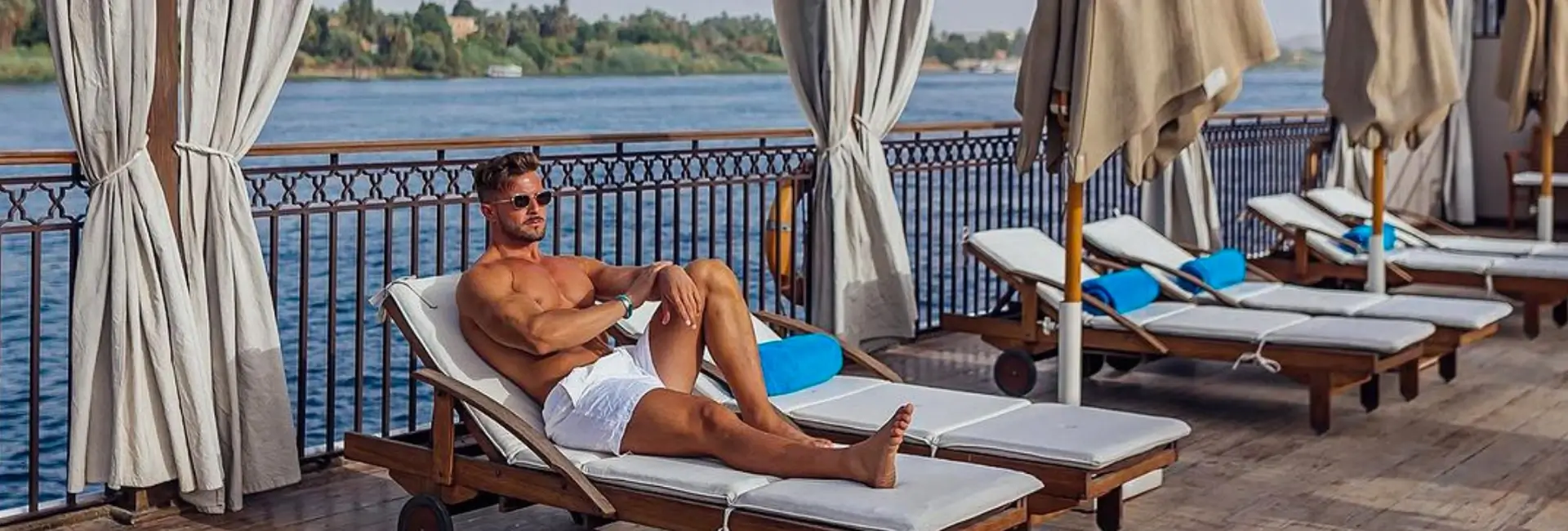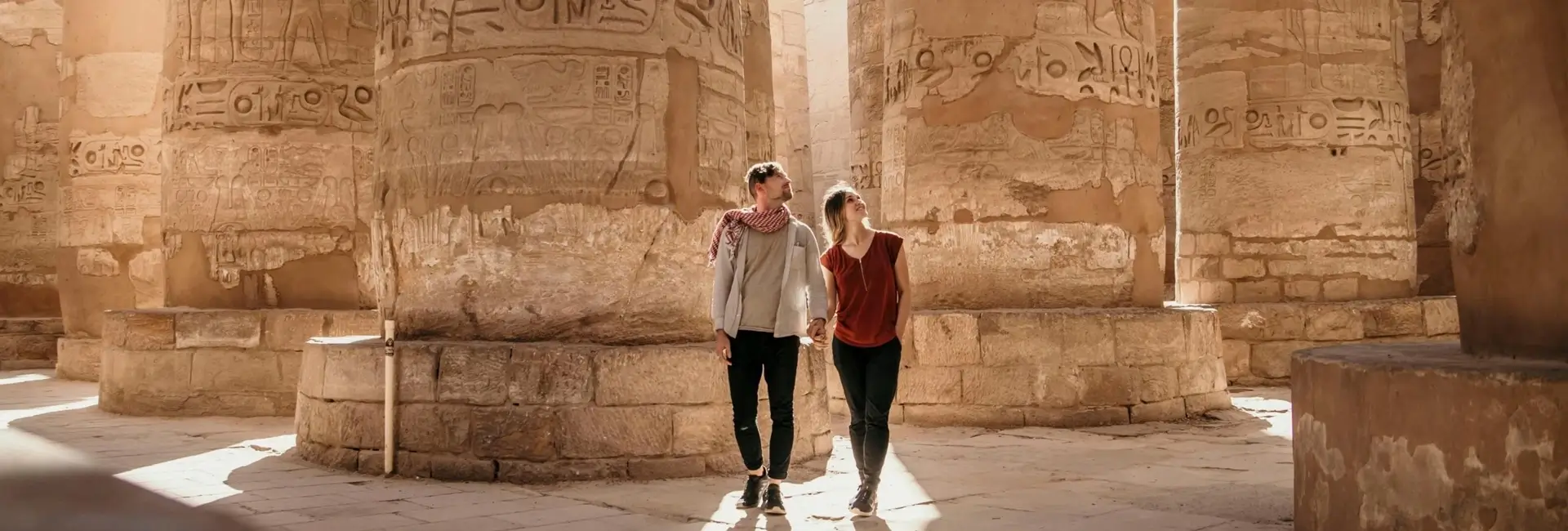
The moment the train pulls into Aswan station, and you step onto the platform, something shifts.
It is not dramatic. There is no single thing you can point to. But the air feels different — drier, warmer, African in a way that Cairo and Luxor are not. The Nile, when you see it from the corniche for the first time, is wider and darker blue than you expected. The granite boulders break the surface of the water like the backs of sleeping animals. A white-sailed felucca moves silently across the river. On the far bank, the desert cliffs glow the color of warm terracotta.
Cairo hits you like a fist. Luxor fills you with awe. Aswan does something quieter and stranger — it makes you want to sit down, slow down, and stay.
I was born in Egypt, but I grew up making trips to Aswan. It was where my family went when Cairo got too loud. It is where I brought my first international tour group fifteen years ago. And it is still, to this day, the city I most love to introduce to visitors who have never experienced it.
Here is everything you need to know before you arrive.
✅ Key Takeaways
Aswan is Egypt's most underrated destination — not just a gateway to Abu Simbel but a city with extraordinary temples, islands, Nubian culture, and Nile scenery.
Philae Temple is the must-visit centerpiece — arrive in the afternoon for the best light, or return for the Sound & Light Show in the evening.
The Nubian people and culture are what make Aswan unique in Egypt — visit the Nubia Museum and a Nubian village; they are the soul of the city.
Abu Simbel is non-negotiable — plan your departure from Aswan at 5:30 am (fly) or 4:00 am (road convoy), and allow a full morning at the temples.
A felucca at sunset is the defining Aswan experience — negotiate with a captain on the corniche for approximately 50–100 EGP per hour.
Two days is the recommended minimum — one day for Aswan's sites, one day for Abu Simbel, and a Nubian village evening.
The Old Cataract Hotel is open to non-guests for dining — one sundowner on that terrace as the sun goes down over the Nile is an Aswan essential.
Why Aswan Is Different From Every Other Egyptian City
Most visitors arrive in Aswan expecting another temple city. Within an hour, they discover something richer — a place where ancient Egyptian civilization meets African Nubian culture, where the Nile is at its most dramatically beautiful, and where the pace of life has the grace to finally slow down. Aswan is Egypt's southernmost major city, sitting at the ancient border between pharaonic Egypt and the Nubian Kingdom of Kush. That geography shapes everything: the landscape, the people, the food, the music, the very feel of the air.
The Nile at Aswan is different from the river you see anywhere else in the country. It is wider here, bluer, broken by enormous granite boulders and palm-fringed islands. Feluccas move under white sails without engines, without noise. The West Bank rises in golden desert cliffs. The light, especially from October through March, has a clarity that photographers travel halfway across the world to find.
But the deepest reason Aswan feels unlike any other Egyptian city is its people. The Nubian community gives this city a soul that is African in character, ancient in roots, and warm in a way that goes beyond hospitality — it is simply how life is lived here. Cairo is Egypt's brain. Luxor is Egypt's history. Aswan is Egypt's heart.
"Every visitor I have brought to Aswan says the same thing within an hour of arriving: 'I did not expect this.' They expected temples and they found something richer — a city that still knows how to breathe."
📸 Image suggestion: Orientation map — East Bank corniche / Philae Island / Elephantine Island / Kitchener's Island / West Bank Tombs / High Dam (south).
The Temples — Aswan's Ancient Anchors
Aswan has three ancient sites, each with a distinct character and emotional register. The guide below introduces them in ascending order of the impression they are likely to leave on you.
Philae Temple — The Island Temple That Almost Vanished
Philae Temple sits on Agilkia Island in the Nile, reachable only by a short motorboat ride from the dock near the Aswan High Dam. It is dedicated to Isis — goddess of magic, healing, and motherhood, one of the most beloved deities in the ancient Egyptian pantheon. But what makes Philae extraordinary is not only its beauty. It is the story of how it survived.
When the Aswan High Dam was constructed in the 1960s, the original Philae Island was permanently submerged beneath the waters of Lake Nasser. Between 1972 and 1980, UNESCO mounted one of the greatest archaeological rescue operations in history: the entire temple complex — every column, every carved relief, every stone — was dismantled and rebuilt stone by stone on the higher ground of Agilkia Island. Today's visitor walks through a temple that was moved across water and rebuilt with millimetre precision. That fact alone makes Philae one of Egypt's most remarkable places.
The temple complex rewards slow walking. The Kiosk of Trajan — a graceful rectangular pavilion of elegant columns open to the sky — is the most photographed structure in Aswan and one of the most photographed in all of Egypt. Beyond it, the Hypostyle Hall, the Temple of Hathor, and the Birth House each carry their own carved narratives. The colours on some reliefs have survived 2,000 years with extraordinary vividness.
"Arriving at Philae by motorboat at dusk, the temple appears through the blue water and the date palms like something from a dream. The columns glow amber. The reflection in the Nile below them is exact and perfect. I have brought visitors here more times than I can count and I have never once failed to see them catch their breath."
⏰ Opening Hours: 7:00 am – 4:00 pm daily ⏱️ Allow: 1.5 hours minimum (longer if you stay for the light) 💰 Entrance Fee: 450 EGP (temple) + motorboat fee (shared or private) 🌙 Sound & Light Show: Evening performances narrating the Isis and Osiris myth — the temple illuminated against the dark Nile; genuinely atmospheric. Fee: ~200 EGP. Times vary seasonally — confirm locally. |
💡 Insider Tip — The Last Boat to Philae Most tourists visit Philae in the morning, when the site is at its busiest between 9 am and noon. Take the last afternoon boat at 3:00–3:30 pm instead. The light on the western columns is extraordinary — deep gold, long shadows. The crowds have cleared. And the crossing back at sunset, with the water turning copper, is one of Aswan's finest views. I have been doing this for fifteen years and it never gets old. |
📸 Image suggestion: The Kiosk of Trajan reflected in still Nile water at golden hour.
The Unfinished Obelisk — The Stone That Broke Before It Was Born
Lying in the granite quarry where it was abandoned millennia ago, the Unfinished Obelisk is Egypt's most honest monument. At 42 metres in length and weighing approximately 1,200 tonnes, it would have been the largest obelisk ever erected — larger than anything still standing in Egypt or anywhere else in the world. Then a fatal crack appeared in the rock. The quarry workers laid down their tools and left. The obelisk has never moved.
What makes it genuinely fascinating is not its size but its context. This is the only place on earth where you can see exactly how ancient Egyptians carved their monuments out of solid rock. The tool marks are still visible in the granite. The ramps and channels cut by the workers are still there. The entire industrial machinery of ancient Egypt is preserved in the act of being used. It is a history lesson in stone.
Honest assessment: thirty minutes is sufficient for most visitors. The Unfinished Obelisk is intellectually interesting and historically significant, but it will not overwhelm you emotionally the way Philae will. It is, however, an important piece of the whole picture — an answer to the question every thoughtful traveller eventually asks: 'But how did they actually build these things?'
⏰ Opening Hours: 7:00 am – 4:00 pm daily ⏱️ Allow: 30–45 minutes 💰 Entrance Fee: 220 EGP |
Kalabsha Temple — The Secret Site Near the Dam
Most visitors to Aswan never hear of Kalabsha Temple. That is a loss, and also an opportunity. Relocated to a small island near the Aswan High Dam — saved from the rising waters of Lake Nasser in the same UNESCO operation that rescued Philae — Kalabsha is dedicated to the Nubian god Mandulis, one of the rare surviving temples to a deity from the ancient Kingdom of Kush rather than the pharaonic Egyptian pantheon. It is almost always empty.
Access requires a boat from the High Dam area, typically arranged as part of a dam visit. The combination of a genuinely ancient site, a peaceful Nile island setting, and the near-absence of other tourists makes Kalabsha one of Aswan's most rewarding experiences for the traveller who has already seen Philae and wants to go one layer deeper.
The Islands — Aswan's Living Soul
Aswan's islands are not tourist attractions in any conventional sense. They are communities, gardens, and sanctuaries — places where the Nile's relationship with human life has remained fundamentally unchanged for thousands of years. Taking a local ferry or felucca to spend time on these islands is among the most distinctive and quietly profound things you can do in Egypt.
Elephantine Island — The Island That Was Ancient Aswan
Elephantine is the largest island in the Nile at Aswan, and it was the original heart of the ancient city of Abu before the modern settlement on the East Bank existed. Today it is home to two living Nubian villages — Siou and Koti — whose colorful houses, hibiscus gardens, and resident Nile crocodiles (kept as pets by some village families, a long Nubian tradition) make it one of Egypt's most visually distinctive communities.
The island also contains an archaeological zone: ruins of the ancient city, the Temple of Khnum (the ram-headed god believed by ancient Egyptians to have fashioned humanity on his potter's wheel), and the famous Nilometer — a graduated stone staircase descending into the Nile, used for 3,000 years to measure flood levels and predict the agricultural year. The Aswan Museum, housed in a modest building on the island, holds a charming collection of artifacts from excavations at the site.
Access: take the local passenger ferry from the corniche — approximately 5 EGP each way, a few-minute crossing. It is one of the best 5 EGP you will spend in Egypt.
"Elephantine Island feels like a village from another century. The children wave at your boat as you arrive. The houses are painted turquoise and yellow and deep rose. An old man sits outside his door drinking tea. This is Egypt at its most unhurried and most generous."
📸 Image suggestion: Colorful Nubian house facades on Elephantine Island — turquoise, rose, and yellow walls, bougainvillea overhead.
Kitchener's Island (Botanical Garden) — The Tropical Secret
Lord Kitchener, the British Field Marshal and administrator, was given this small Nile island as a gift during his years in Egypt and transformed it into a botanical garden filled with plants collected from across Africa, Asia, and Europe. Today it is simply one of Aswan's most beautiful and peaceful places — tall palms, birds of paradise, exotic tropical trees, birdsong, and shade at every turn.
The botanical garden sees far fewer visitors than the main sites, which makes it particularly valuable on a hot afternoon. The birds alone justify the crossing — herons, hoopoes, and numerous migratory species rest here on their routes between Europe and sub-Saharan Africa.
⏰ Opening Hours: 7:00 am – sunset 💰 Entrance Fee: 50 EGP + boat hire (approximately 30–50 EGP for the crossing) ⏱️ Allow: 45 minutes – 1 hour |
"On a hot Aswan afternoon, Kitchener's Island is a gift. It is cool under the palms. The birds are extraordinary. And there are almost never crowds. An hour here is worth ten souvenirs from the market."
The Nile at Aswan — The Most Beautiful Stretch of the River
The Nile flows through all of Egypt, but it reaches its most dramatic form at Aswan. Here the river is wider, slower, and more theatrical — broken by granite cataracts that send white water rushing between massive boulders, flanked by islands of palm and acacia, watched over by the golden cliffs of the West Bank. Every Nile cruise ends in Aswan for a reason: this is where the river is at its most beautiful.
Felucca at Sunset — The Defining Aswan Experience
A felucca is a traditional wooden sailing boat powered entirely by the wind — no engine, no noise. On the Nile at Aswan, at the end of an October or February afternoon, the experience of sailing in one is almost impossible to describe without sounding hyperbolic. The water turns gold. The West Bank cliffs glow amber. The granite boulders catch the last light and hold it. The white sail billows. The only sound is the wind and the occasional call of a bird from the riverbank. It is one of the most beautiful sights in Egypt, and it costs approximately 50–100 EGP for an hour.
Book directly from the corniche: felucca captains wait along the waterfront and the negotiation is straightforward. A solo traveller or couple can take the whole boat. The route typically sails past Elephantine Island and toward Kitchener's Island, threading between the granite boulders of the first cataract.
"The felucca at sunset is not an activity you do in Aswan. It is the moment Aswan becomes real."
💡 Insider Tip — Best Conditions for the Felucca October through April offers the best sailing conditions — consistent Nile breezes and comfortable temperatures. Bring a light layer for the return trip; the river air cools quickly after the sun goes down. In summer, the heat makes morning sailing more practical, though the golden light at that season is still extraordinary. |
Nubian Village Felucca Trip — Crossing to the Other Egypt
Many felucca captains can arrange a crossing to a Nubian village on the West Bank or on Elephantine Island as part of your sailing trip — simply ask when you negotiate the price. Spending an hour or two in a Nubian village is among the most memorable things to do in Aswan: tea with a local family, brightly painted houses to photograph, the opportunity to hold a baby crocodile (a long Nubian tradition — very safe, entirely surreal), and in some villages, a traditional Nubian meal of fresh fish, ful, bread, and hibiscus tea.
This is a genuine community, not a performance. Dress modestly — covered shoulders and knees for women. A small gift for the family (tea, sugar, school supplies) is more welcome and more dignified than cash.
"Crossing the Nile to a Nubian village is crossing into another world — one that exists on the same river but in a completely different relationship with time. The hospitality is not performed. It is simply how people live here."
Nubian Culture — The Soul of Aswan
Of all the things Aswan offers, the Nubian dimension is the most consistently underwritten in travel guides and the most important to understand. Every competitor article gives Aswan's Nubian culture a paragraph. This guide gives it the section it deserves — because the Nubian people are the reason Aswan is unlike anywhere else in Egypt.
The Nubia Museum — Egypt's Most Important Undervisited Museum
The Nubia Museum was established in 1997 in collaboration with UNESCO, created specifically to preserve and celebrate Nubian heritage after the construction of the Aswan High Dam in the 1960s permanently flooded tens of thousands of Nubians' ancestral villages beneath Lake Nasser. It is one of the finest museums in Egypt — beautifully built, expertly curated, and almost always quiet.
The collection traces Nubian civilization from 6,500 BCE to the present day: the ancient Kingdom of Kush, the Nubian pharaohs of Egypt's 25th Dynasty (who ruled all of Egypt and were among its most powerful and culturally sophisticated rulers), the traditions of food, music, and craft that survived millennia of upheaval, and the living culture of Nubian families today. Allow at least 1.5 to 2 hours — more if you are the kind of traveler who reads every label.
"The Nubia Museum is where you understand what Egypt lost when it built the High Dam. Not just archaeological sites — though those were staggering in number. But a living culture forced to abandon its homeland. The museum was built as an act of cultural justice. It is one of the most moving museums I know."
⏰ Opening Hours: 9:00 am – 9:00 pm daily (rare evening hours — use them) ⏱️ Allow: 1.5 – 2 hours 💰 Entrance Fee: 300 EGP |
💡 Insider Tip — The Nubia Museum at Dusk Visit between 6 pm and 8 pm when the day-trippers have gone, and the building is quiet. The indoor galleries are beautifully lit after dark, and the outdoor garden — with views toward the Nile — is one of the best spots in Aswan to sit and think. Combine this with the Philae Sound and Light Show, and you will have spent an evening that most Egypt tourists never experience. |
The Nubian People — An Honest Introduction
The Nubians are one of Africa's oldest civilizations. Their history in this region predates pharaonic Egypt, and their most powerful period — the 25th Dynasty — saw Nubian pharaohs rule the entire Nile Valley from the Kingdom of Kush (in what is now northern Sudan) all the way north to the Mediterranean. These were sophisticated, culturally rich rulers who revived the tradition of pyramid-building that Egyptian pharaohs had largely abandoned.
The construction of the Aswan High Dam between 1960 and 1970 displaced over 100,000 Nubian families from their ancestral villages — an enormous cultural trauma that Nubian communities still carry and still speak about. The villages of generations were submerged beneath Lake Nasser. Families were resettled, often far from the river that had defined their entire way of life. The Nubia Museum exists partly as an acknowledgment of this loss.
Today's Nubian culture is vivid and alive: distinctive architecture (houses painted in bold colors with animal and geometric motifs), cuisine shaped by the river (fish, grills, hibiscus tea), music with African rhythmic roots that are different in character from Arabic music, and a profound warmth toward visitors. The Nubian people are the reason Aswan is different from every other city in Egypt. To visit Aswan without understanding it is to read only half the book.
Modern Aswan — The City Beyond the Sites
Aswan is not only its ancient monuments. It is a living city with its own character, rhythm, and pleasures — a place where you can spend an evening wandering a market that smells of frankincense and cardamom, sitting on a corniche terrace as the Nile turns gold, or having a drink in a bar where Agatha Christie once wrote and Winston Churchill once drank.
The Aswan High Dam — Engineering That Changed Egypt Forever
Completed in 1971 after a decade of construction, the Aswan High Dam was for a period the largest dam in the world. It created Lake Nasser — one of the largest artificial lakes on earth, stretching 5,250 square kilometers south toward Sudan. More consequentially, it ended the annual Nile flood cycle that had defined Egyptian agriculture and civilisation for five thousand years. No more floods. No more black silt renewal. But also no more droughts. The dam transformed Egypt's economy and made year-round irrigation possible on a national scale.
The human and cultural cost was enormous: over 100,000 Nubian families displaced, dozens of ancient sites submerged, and a way of life erased in less than a decade. The view from the dam — Lake Nasser stretching southward toward Sudan, vast and blue and almost impossibly large — makes the scale of that decision tangible.
"The High Dam is not just an engineering project. It is Egypt's most consequential decision of the 20th century — with benefits and losses that Egyptians still debate today. Standing on it, you understand the scale of both."
⏰ Opening Hours: 7:00 am – 5:00 pm ⏱️ Allow: 45 minutes 💰 Entrance Fee: Free or nominal — confirm locally |
The Aswan Souq — The Best Market Outside Cairo
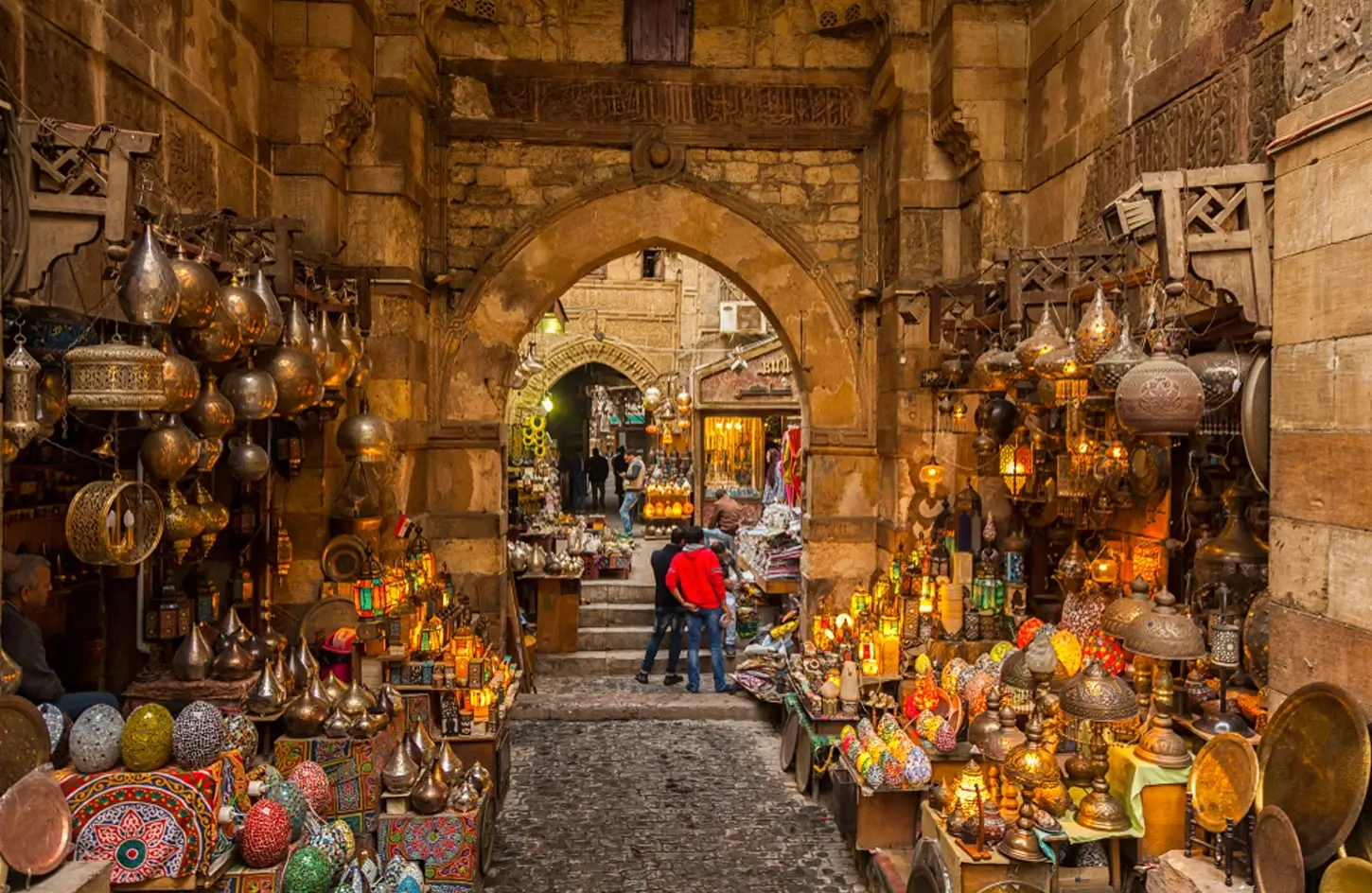
Aswan's spice and handicraft market rivals Khan el-Khalili in Cairo for atmosphere and surpasses it in authenticity. The goods here reflect Aswan's position as Egypt's southernmost trading city — a place where African commerce has moved through for thousands of years. Nubian crafts: woven baskets, beaded jewellery, carved wooden figures, hand-embroidered textiles. Spices: frankincense, myrrh, saffron, hibiscus flowers — the dried karkadé that becomes Aswan's signature crimson tea. Ebony and African hardwood products found nowhere else in Egypt.
"The Aswan Souq has a smell — frankincense and cardamom and something deeper, African and ancient — that I cannot find anywhere else in Egypt. Walk slowly. Let the vendors be. Do not buy from the first stall. Follow your nose."
Best time to visit: early evening, when the heat has eased, and the market fills with local families doing their shopping alongside tourists. The energy at 7 pm is completely different from 10 am.
The Aswan Corniche — Egypt's Most Beautiful Riverside Promenade
The corniche is a wide, palm-lined waterfront promenade along the East Bank of the Nile — the social heart of Aswan, the place where the city comes to breathe. The view from the corniche encompasses Elephantine Island, feluccas under sail, the golden West Bank cliffs, and the white dome of the Aga Khan Mausoleum visible on the hill above the West Bank. At dusk, when the Nile catches the last light, it is one of the finest views in Egypt.
The café culture along the corniche — small shisha places with mint tea and plastic chairs, a river breeze, the unhurried rhythm of Upper Egyptian life — is its own form of travel reward. Sit. Watch. Let Aswan arrive at its own pace.
"The Aswan corniche at sunset is what I show visitors who say they do not need to slow down. After twenty minutes sitting by the Nile, they always change their minds."
The Old Cataract Hotel — Aswan's Living Legend
Built in 1899, the Old Cataract Hotel is one of Egypt's most historically significant and reputedly most beautiful hotels. Its guest list reads like a century of world history: Winston Churchill, Tsar Nicholas II, Howard Carter, Princess Diana, Jimmy Carter, and — most famously in literary terms — Agatha Christie, who wrote Death on the Nile here while staying in what is now the Agatha Christie Suite.
Non-guests can visit. The Saraya restaurant and the terrace bar are open to visitors, and the terrace view over the Nile — Elephantine Island in the foreground, the West Bank cliffs glowing in the evening light — may be the finest single view from any building in Egypt. A meal for two at Saraya runs approximately 3,000–4,000 EGP. A sundowner at the bar costs considerably less. Both are worth it.
"The Old Cataract Hotel is not a tourist attraction. It is a piece of Egypt's living memory. Sitting on that terrace as the sun goes down over the Nile, with a cold drink and 125 years of history surrounding you — this is something you will describe to people for the rest of your life."
⚠️ Writer note: Confirm current non-guest dining policies and reservation requirements before publishing — hotel policies can change seasonally.
💡 Insider Tip — Karkadé: The Hibiscus Tea Rule In Aswan, you must drink karkadé — the deep crimson hibiscus tea that is the unofficial drink of Upper Egypt. Served cold in summer, hot in winter, always intensely flavoured and slightly tart. The Nubian version comes with more sugar and sometimes a hint of ginger. Ask for it at any café on the corniche, in any Nubian village, at the Old Cataract hotel bar. It will become one of the tastes you most strongly associate with Egypt. I have had visitors email me years later to say they still search for it at home. |
The Tombs of the Nobles — Aswan's Secret West Bank
Most visitors to Aswan never cross to the West Bank unless it is on a Nubian village felucca trip. That means they miss one of the city's most extraordinary and under-appreciated attractions: the rock-cut tombs of Aswan's Old and Middle Kingdom governors, carved into the cliff face directly opposite Elephantine Island. These are not the Valley of the Kings — they are smaller, less decorated, and in some cases less perfectly preserved. But they contain some of the most human stories in all of ancient Egypt.
The hill of the tombs is called Qubbet el-Hawa — the Dome of the Wind — named for the persistent Nile breeze at its summit. The view from the top is one of the best panoramas in Aswan: the full width of the river, both banks, the islands, the desert extending south. The most celebrated tomb belongs to Harkhuf, an Old Kingdom explorer and diplomat who made four expeditions into sub-Saharan Africa and on his last journey brought back a dancing dwarf as a gift for the child pharaoh Pepi II. The pharaoh's ecstatic letter of thanks is carved on the tomb's walls — one of the most charming documents to survive from ancient Egypt.
⏰ Opening Hours: 7:00 am – 4:00 pm ⏱️ Allow: 1 – 1.5 hours (including the climb and the view) 💰 Entrance Fee: 180 EGP | Access: local ferry from corniche (~5 EGP) then climb steep stone steps |
These tombs are Aswan's most under-appreciated attraction. In Luxor, the tombs are the main event. Here they are almost empty, and they reward the traveller who seeks out the quieter truths of ancient Egypt.
Day Trips from Aswan — The Most Important One First
Abu Simbel — Do Not Skip This Under Any Circumstances
Abu Simbel is 280 kilometers south of Aswan — either a 45-minute flight or a 3 to 3.5-hour road convoy through the Western Desert. The distance and the early departure required (see below) mean many visitors on tight itineraries consider skipping it. Do not. Abu Simbel is not a day trip. It is the reason to come to Aswan.
The Great Temple of Ramesses II presents four 20-metre colossal statues of the pharaoh on its facade — the largest rock-cut monument ever built — above an interior sanctuary whose solar alignment is so precise that twice a year (October 22nd and February 22nd), the rising sun illuminates the face of the innermost statue of Ramesses while leaving the statue of Ptah, god of darkness, permanently in shadow. The Temple of Nefertari, smaller and more intimate, is the only temple in Egypt dedicated by a pharaoh to his wife — its painted reliefs are among the finest and most affecting in the country.
Depart 5:30 am from Aswan (fly) or 4:00 am (road convoy) — must be organized in advance through your hotel or tour operator. Book at least 24 hours ahead, and preferably at time of booking your Aswan accommodation. See our dedicated Abu Simbel guide for full logistics, photography tips, and the solar festival dates. → Abu Simbel Guide (Post #17)
Kom Ombo & Edfu — The Road North Toward Luxor
Both temples sit on the Nile between Aswan and Luxor and are most commonly visited as Nile cruise stops — the natural rhythm of any southbound or northbound journey. They can also be done as a combined overland day trip by private car from Aswan.
Kom Ombo, one hour north, is a uniquely double temple dedicated simultaneously to Sobek (the crocodile god) and Haroeris (a form of Horus), its two halves mirror-image symmetrical. The Crocodile Mummy Museum within the complex is a genuine surprise. Edfu, two hours north, houses the most completely preserved temple in Egypt — the vast Temple of Horus built in the Ptolemaic era, its walls rising dark and enormous from the modern town that surrounds it. Both are essential; if time allows, combine them as a single day's drive north toward Luxor.
→ Things to Do in Luxor — Post #4 in this series.
Planning Your Time in Aswan
If You Have 1 Day in Aswan
One day is genuinely enough to see Aswan's highlights. Two days are enough to understand Aswan. Here is the most efficient single-day structure:
• 7:00 am — Philae Temple — arrive early for the best light and fewest tourists. Allow 1.5 hours.
• 10:00 am — Unfinished Obelisk — efficient 30–45-minute stop.
• 11:00 am — Aswan High Dam — 45 minutes; views over Lake Nasser.
• 1:00 pm — Lunch on the East Bank corniche.
• 3:00 pm — Nubia Museum — 1.5 hours; the essential cultural context for everything you have seen.
• 5:00 pm — Felucca sunset cruise on the Nile — 1 hour; non-negotiable.
• Evening — Corniche walk, Aswan Souq, dinner.
If You Have 2 Days in Aswan
• Day 1 — As above — include the Philae Sound & Light Show in the evening.
• Day 2, 4:00–5:30 am — Depart for Abu Simbel by road convoy or morning flight.
• Day 2, noon — Return to Aswan.
• Day 2 afternoon — Elephantine Island felucca trip + Nubian village visit.
• Day 2 evening — Old Cataract Hotel terrace — sundowners with the greatest Nile view in Egypt.
Entrance Fees & Opening Times — Quick Reference
Site | Opens | Closes | Fee (EGP) | Notes |
Philae Temple | 7:00 am | 4:00 pm | 450 EGP | + motorboat fee |
Sound & Light — Philae | Evenings | Variable | ~200 EGP | Multiple languages |
Unfinished Obelisk | 7:00 am | 4:00 pm | 220 EGP | 30-min visit |
Aswan High Dam | 7:00 am | 5:00 pm | Free/nominal | — |
Nubia Museum | 9:00 am | 9:00 pm | 300 EGP | Evening hours available |
Tombs of the Nobles | 7:00 am | 4:00 pm | 180 EGP | Steep climb, great views |
Kitchener's Island | 7:00 am | Sunset | 50 EGP | + boat hire |
Elephantine Island | Any | Any | Free | + local ferry (~5 EGP) |
Old Cataract Hotel | Any | Any | N/A | Non-guests welcome in restaurants |
Abu Simbel | 5:00 am | 5:00 pm | 560 EGP | + transport from Aswan |
⚠️ All fees are approximate. Verify locally on arrival — Egyptian site fees are reviewed and updated regularly.
Frequently Asked Questions About Aswan
Q1: How many days do you need in Aswan?
Two days is the recommended minimum for a first visit. Day 1 covers Aswan's core sites — Philae Temple, the Unfinished Obelisk, the High Dam, and the Nubia Museum — plus a felucca sunset and the corniche. Day 2 is devoted to Abu Simbel in the morning, with the afternoon free for Elephantine Island and a Nubian village visit. One day is possible for the highlights but leaves Abu Simbel requiring a separate trip.
Q2: Is Aswan or Luxor better?
They serve completely different purposes, and both are essential to a full Egypt experience. Luxor is the world's greatest concentration of ancient temples and tombs — overwhelming, archaeological, and historically dense. Aswan is more intimate — slower, more culturally layered, with the Nile at its most beautiful and Nubian culture adding a dimension found nowhere else in Egypt. Most travelers who visit both prefer whichever one they visited second. If forced to choose: Luxor for archaeology, Aswan for soul.
Q3: What is Philae Temple, and why is it famous?
Philae Temple is a Ptolemaic and Roman temple complex dedicated to the goddess Isis, located on Agilkia Island in the Nile near Aswan. It is famous for its extraordinary architectural beauty — particularly the Kiosk of Trajan reflected in the Nile — and for its remarkable rescue story. When the Aswan High Dam was built, UNESCO dismantled the entire temple stone by stone and rebuilt it on higher ground to save it from permanent submersion. It is one of the most successful archaeological rescue operations in history.
Q4: How do you visit a Nubian village from Aswan?
The easiest way is to take a felucca or motorboat from the Aswan corniche across to a Nubian village on the West Bank or on Elephantine Island. Most felucca captains can arrange this as part of a sailing trip — negotiate the price and destination before boarding (approximately 100–200 EGP for the full trip). Many hotels also arrange organised Nubian village visits with tea, a traditional meal, and cultural interaction. Dress modestly and bring a small gift rather than cash.
Q5: What is the best time to visit Aswan?
October to April offers the most comfortable temperatures (20–35°C) and is the recommended window for most travelers. November and March are the local guide's top picks — pleasant weather, moderate crowds, and the Nile at its most photogenic. The Abu Simbel Sun Festivals (October 22 and February 22) are special occasions worth planning around. Summer (May–September) sees temperatures regularly exceeding 42°C — Aswan is the hottest major city in Egypt. See our Best Time to Visit Egypt guide (Post #1) for the full seasonal breakdown.
Q6: Can I visit the Old Cataract Hotel if I am not staying there?
Yes — the Old Cataract Hotel welcomes non-guests at its restaurants and bars. The terrace bar and the Saraya restaurant are open to the public and offer spectacular views over the Nile. A sundowner on the terrace at sunset is one of Aswan's most memorable experiences. Reservations for dinner are recommended during peak season — contact the hotel directly before arrival. Note: policies can change seasonally; always confirm in advance.
Your Aswan Journey Starts Here
Aswan rewards those who stay longer. Every extra hour reveals another layer — another island, another conversation with a Nubian family, another sunset that makes you reach for your phone and then put it back, because some things are better witnessed than photographed.
Whether you have one day or five, the city will give back exactly the attention you bring to it. Arrive with curiosity. Leave the itinerary loose enough to follow a felucca captain's recommendation. Drink the hibiscus tea. Stay for the light on Philae at dusk.
Egypt's greatest monuments are famous for a reason. But Egypt's greatest experience — quiet, human, unhurried, generous — is this city on the southern river.
🗺️ Planning Your Aswan Days? Our local team knows every boat captain, every Nubian family, and the best table at the Old Cataract. Let us build your perfect two days. 📲 WhatsApp us: https://wa.me/201002135997 |