It was late November, and we were somewhere between Edfu and Kom Ombo when the sun began to set.
The river was the color of copper. Both banks were lined with date palms catching the last light, and beyond them, the desert cliffs ran in long amber lines toward the horizon. The ship had gone quiet — passengers on the upper deck, drinks in hand, nobody speaking. Even the Egyptologist standing beside me said nothing for a long time.
Then he said, "This is why people come back."
He was right. But what he didn't say — what he knew, and I was about to learn — was that this moment only existed because we were here in November. In August, that sunset would have been endured from behind air-conditioned glass, the banks too bright and bleached to feel like this. In December, the deck would have been crowded. In May, we'd have been asleep from the heat since two in the afternoon.
Timing isn't everything on a Nile cruise. But it's close.
This guide will tell you exactly when your Nile moment should be.
The Short Answer — And Why It Depends on Who You Are
The best time to cruise the Nile is October to April, when temperatures range from a comfortable 12–30°C, sightseeing is genuinely enjoyable, and the afternoon light turns the limestone temples a warm honey color. If you can only choose one month, choose November — the weather is near-perfect, the crowds are manageable, and the quality of light on the river and on the carved temple walls is unlike any other time of year.
But 'best time' is never a single answer. It depends on who you are.
• Couples and honeymooners: November or February
• Families with school-age children: October half-term or April Easter holidays
• Budget-conscious travelers: May or September — same temples, a fraction of the price
• Photographers: November through February — low sun, long shadows, extraordinary light
• Heat-tolerant deal-seekers: June through August — 30–50% off and near-empty sites
The Nile doesn't have a bad season. It has the wrong season for the wrong traveler. This guide will tell you which season is right for you.
📊 Quick-Reference Summary Table — Month-by-Month at a Glance:
Month | Avg Temp | Crowds | Price | Best For | Key Event |
October | 25–35°C | Moderate | Mid | Photographers, independents | UK half-term (late Oct) |
November | 20–30°C | Moderate | Mid | Couples, first-timers, all | Best light of the year |
December | 15–25°C | HIGH | PEAK | Comfort-seekers, festive | Christmas / Coptic prep |
January | 12–22°C | PEAK | PEAK | Weather-first planners | Abu Simbel Sun Festival (22nd) |
February | 14–24°C | Moderate | High | Honeymooners, couples | Ramadan begins (~17 Feb 2026) |
March | 18–32°C | Low–Mod | Mid | Budget + good weather | Ramadan ends (~19 Mar 2026); Khamsin winds |
April | 22–38°C | LOW | Low | Independents, budget | Easter spike (brief) |
May | 30–40°C | VERY LOW | LOW | Repeat visitors, deal hunters | Empty temples at dawn |
June–Aug | 38–46°C | LOWEST | LOWEST | Gulf/South Asian travelers | Summer heat maximum |
September | 32–42°C | Low | Low | Budget, heat-tolerant | Season is turning late month |
Month by Month — What Cruising the Nile Actually Feels Like
Forget the seasonal blocks. Here is what sailing the Nile genuinely feels like in each month of the year — written not from a brochure but from the sun deck.
October — The River Wakes Up Again
In October, the Nile still carries the warmth of summer, but something in the air has shifted. The light in the early morning is extraordinary — slanted, golden, casting long shadows across the temple walls as your ship rounds the bend toward Kom Ombo.
Temperatures settle between 25–35°C, warm enough for comfortable sightseeing but no longer punishing. Crowds are moderate and building — the season is beginning, but it hasn't peaked. Prices are transitioning from shoulder to peak, so booking six to eight weeks ahead secures the best cabins at reasonable rates.
October is an excellent month for independent travelers and photographers who want warmth and color without the full weight of the December crowd. The Nile temples feel accessible — not empty, but not crushed.
💡 Insider Tip The second and third weeks of October coincide with UK school half-term, bringing a surge of British families. If you're not traveling with children, the first week of October gives you the same great conditions with noticeably quieter ships. |
• Best for: Independent travelers, photographers, budget-conscious travelers who want warmth without summer extremes
• Cruise type: All three vessel types sail well — an ideal month to try a dahabiya for the first time
• Booking window: 6–8 weeks ahead for standard cruisers; 2–3 months for dahabiyas
November — The Local Guide's Favorite Month
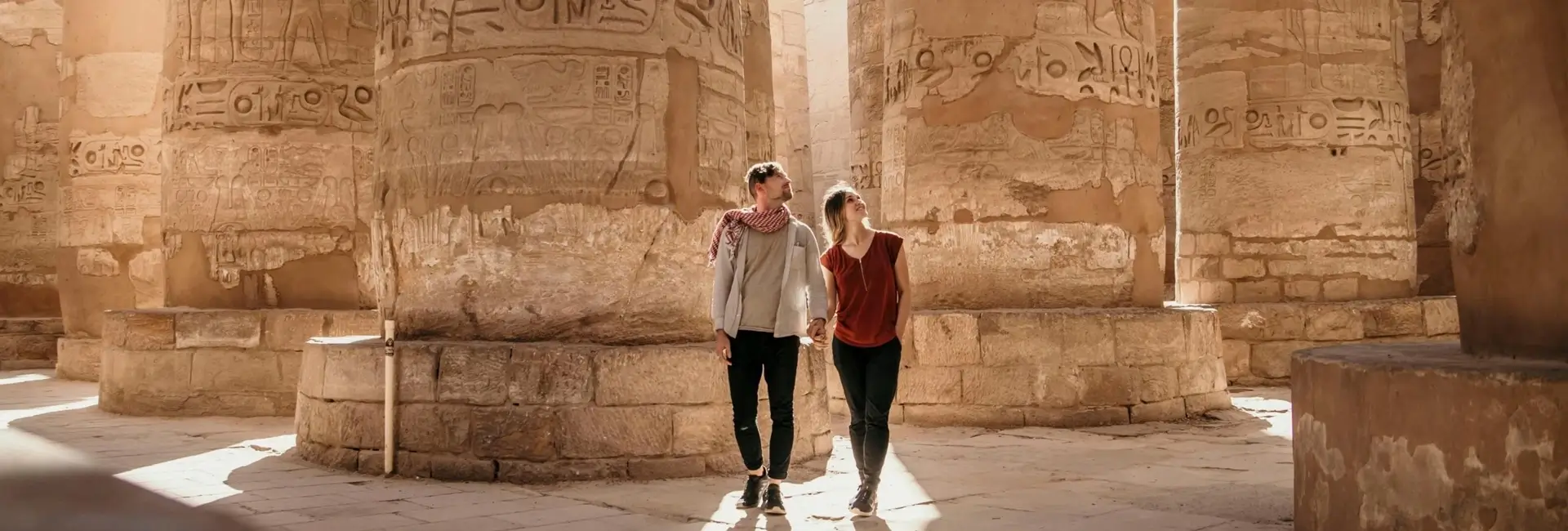
November is when Egypt breathes. The tourists haven't fully arrived yet. At Edfu Temple, you can stand in the great forecourt and be almost alone with the carved reliefs. The light in the afternoon turns the columns the colour of warm honey — deep, saturated, ancient. This is the Egypt you imagined when you booked.
Temperatures hold between 20–30°C — the most reliably comfortable month of the year. Crowds are moderate, sitting between the October rise and the December surge. Prices are climbing toward peak but haven't hit Christmas rates. In almost every metric that matters, November wins.
What makes November genuinely exceptional is the quality of light. The sun sits lower in the sky, and the shadows fall at an angle that catches every chisel groove in every column. The temples don't glare — they glow. Photographers who have cruised in multiple months consistently tell me the same thing: November light is different, and better.
The winds on the Nile in November are also reliably consistent — ideal for dahabiya sailing. If you have the budget and the flexibility to sail on a traditional wooden houseboat with twelve people instead of a hundred and fifty, November is the month that makes a dahabiya unforgettable.
If I had to choose one month for every traveler — regardless of budget, travel style, or experience level — I would choose November. Every time.
• Best for: Couples, first-time Nile cruisers, photographers, anyone who wants near-perfect conditions
• Cruise type: The definitive month for a dahabiya — reliable wind, perfect evening temperatures, extraordinary light
• Booking window: 3 months ahead for standard cruisers; premium dahabiyas are fully booked by August
December — Festive Egypt, Beautiful and Busy
December on the Nile has a festive energy that's surprisingly moving — the cruise ships strung with lights, Coptic Orthodox preparations beginning in the riverside villages, evenings cool enough for a jacket on the sun deck and a glass of something warm.
Temperatures drop to a genuinely pleasant 15–25°C — warm days, cool evenings. The quality of daylight is excellent. The problem is the crowds. Christmas and New Year bring peak volumes to every ship, every temple, and every tour bus. Thirty cruise ships can dock at Edfu on a December morning — that's thousands of visitors at a single temple before noon.
December is the month that rewards planning above everything else. If you have booked your preferred cabin six months ahead, reserved your dahabiya, and chosen mid-December rather than the Christmas-New Year fortnight, it is a spectacular time to be on the Nile. If you haven't — you will pay the highest prices for the least desirable options.
⚠️ Christmas and New Year departures (22 December – 5 January) sell out completely. If these dates are your target, book 5–6 months ahead or expect to take whatever remains.
• Best for: Travelers who prioritize weather and don't mind premium pricing and crowds
• Cruise type: Dahabiyas for December are extremely popular and book even faster than standard cruisers
• Booking window: 5–6 months ahead for Christmas/New Year; 3 months for other December dates
January — Peak Season at Its Fullest
January is high season in its purest form. The temples are full. The sunrise excursions have twenty people from your ship and a hundred from the ships docked alongside you. But the weather is as close to perfect as the calendar allows — and the energy on the Nile is extraordinary.
Temperatures dip to 12–22°C, the coolest month of the year. Mornings on the open deck require a layer; evenings can be genuinely cold by Egyptian standards. But the days are clear, dry, and radiantly comfortable for walking the colonnades of Karnak or climbing the hills above the Valley of the Kings.
January 22 brings the Abu Simbel Sun Festival — one of only two days in the year when the rising sun penetrates the full depth of the Great Temple to illuminate the inner sanctuary. Cruises scheduled near Aswan around this date fill months in advance. If this experience is on your list, plan specifically around it.
💡 Insider Tip Pack layers for January — mornings on the Nile can be genuinely cold before 9 am, and felucca passengers will need a sleeping bag for overnight sails from Aswan. |
• Best for: Travelers who prioritize weather above all else and plan well in advance
• Cruise type: Large motor cruisers are best for January comfort and consistency; feluccas require sleeping bags
• Booking window: 4–5 months ahead minimum; Abu Simbel Festival departures, 6 months
February — Sweet Spot for Couples and Honeymooners
February on the Nile has a particular quality of light — clear, sharp, low-angled in the morning — that makes every temple photograph look as if it was commissioned for an architecture magazine. The river is calm. The colour of the water changes hour by hour.
Temperatures sit at 14–24°C — slightly warmer than January, still beautifully comfortable. Crowds ease from the January peak and prices begin to soften slightly. For couples and honeymooners in particular, February offers something rare: the combination of excellent weather, a slightly less crowded experience than December or January, and a quality of light and atmosphere that conspires toward romance.
A critical planning note for 2026: Ramadan begins on or around February 17. A cruise that falls within Ramadan is not a problem — it is, in my experience, one of the most culturally rich times to be on the Nile. We address this fully in the Ramadan section below.
February is the month I recommend to every couple on a honeymoon. The light, the temperature, the mood of the river — all of it conspires toward romance. Book a dahabiya if you possibly can.
• Best for: Honeymoons and romantic getaways, Valentine's week travelers, photography-focused trips
• Cruise type: Excellent for dahabiyas — intimate, serene, the Nile at its most personally beautiful
• Booking window: 2–3 months ahead; Valentine's week cabins on premium ships go fast
March — Warmth, Value, and the Wind from the Sahara
Some days in March, the Khamsin wind arrives, and the sky turns amber. The river gets choppy, and the air smells of desert. It lasts a day or two, and then the blue returns. It's dramatic and oddly beautiful — one of those Egypt moments that feels genuinely ancient.
Temperatures rise through the month, moving from 18°C at the start to 32°C by late March. Crowds decline from the winter peak. Prices soften noticeably from mid-March onward — making this one of the best value months for travelers who want good weather without the premium rates of November or December.
For 2026, Ramadan ends approximately on March 19. A cruise in early to mid-March will coincide with the final weeks of Ramadan — culturally extraordinary, as we discuss below. Late March cruises enjoy post-Ramadan Egypt in full, festive flow.
The Khamsin is worth acknowledging honestly. This hot Saharan wind arrives occasionally between March and May, sometimes turning the sky ochre for a day or two. It rarely ruins a trip, but it does require flexibility — felucca sailing is not possible during Khamsin, and temple visits become dusty. It passes, and when it does, the air is scrubbed clean and the sky a deeper blue than you've ever seen.
💡 Insider Tip Late March is one of Egypt's best-kept secrets for budget-conscious travelers. The weather is still genuinely comfortable, the temples are quiet, and cruise prices are 20–30% below November peak. If your dates are flexible, look at March 20–31. |
• Best for: Budget-conscious travelers who still want good weather; shoulder-season seekers
• Cruise type: Good for all vessel types — build flexibility into felucca plans for potential Khamsin days
• Booking window: 4–6 weeks ahead — strong availability and negotiating room
April — The Last of the Good Weather
April evenings on the Nile are exceptional — warm enough to sit on deck until midnight, the banks lit occasionally by a village fire or a distant light, the smell of river water and desert flowers drifting across from the east bank.
Temperatures range from 22–38°C, warming noticeably through the month, especially by late April. But the crowds are at one of their lowest points of the season. The temples — Edfu, Kom Ombo, Abu Simbel, Luxor — are accessible in a way that January simply doesn't allow. You can stand in the hypostyle hall at Karnak and hear your own footsteps.
Easter week brings a brief crowd spike — primarily European families on school holiday. If you prefer quieter temples, aim for the first two or three weeks of April before the Easter dates arrive. If you don't mind the energy of families and children at the sites, Easter itself has a lovely international atmosphere.
April is also an excellent month for felucca and dahabiya travelers. The evenings are warm enough for deck dining until late, the river traffic is lower than during peak season, and the riverside villages are fully accessible and genuinely welcoming.
• Best for: Independent travelers, budget travelers, those who want emptier temples
• Cruise type: Excellent for feluccas and dahabiyas — warm evenings, reduced traffic, village stops
• Booking window: 3–5 weeks ahead for most dates; Easter week, 2–3 months
May — The Hidden Shoulder Month
May is when Egypt reveals itself to the brave. The temples are empty. The light at 6 am is extraordinary — warm, directional, every carved face cast in sharp relief. By 11am you're back on the ship, lying under a ceiling fan with an ice-cold drink, and the afternoon is yours.
Temperatures climb to 30–40°C. It is hot. But May heat is manageable with structure — early-morning excursions (6–9am), ship by 10am, pool and shade through the afternoon, optional evening visit to cooler sites. Travelers who apply this rhythm consistently report experiences they remember as exceptional: empty temples, unhurried guides, a quality of solitude that peak-season Egypt simply cannot offer.
Prices in May are significantly below those in November — a 5-star Nile cruise cabin in May can cost what a 3-star cabin costs in December. For travelers who are heat-tolerant and flexible about their daily schedule, May offers a very compelling calculation.
💡 Insider Tip I've guided May cruises where we had Edfu Temple to ourselves for forty-five minutes. That never happens in November. If the solitude is what you want — May is your month. You will trade comfort for access. Most repeat visitors who've done both say it was worth it. |
• Best for: Repeat visitors, deal-hunters, heat-tolerant travelers who want near-empty temples
• Cruise type: Large motor cruisers with strong air conditioning only; avoid feluccas and dahabiyas in May
• Booking window: 2–4 weeks ahead — excellent availability and negotiating room on price
June, July & August — Summer on the Nile: An Honest Assessment
In July, the sun is not a background detail. It is a presence. You feel it on your face seconds after leaving the air conditioning. But at 6 am, before it fully rises, the Nile is extraordinarily flat, silver, completely still, the limestone cliffs glowing gold from within.
Temperatures range from 38–46°C in Luxor and Aswan. This is genuine heat — not uncomfortable heat, but a category of heat that requires complete respect. Temple sightseeing after 10 am in July or August is not recommended; it is a test of endurance rather than a pleasure. Plan every outdoor moment before 10 am. The afternoon on the ship is not wasted time — it's the strategy.
What summer offers in exchange is remarkable: the lowest prices of the year (30–50% below peak on many cruise packages), the emptiest ships, and the most solitary temple experiences available anywhere in the Egypt tourism calendar. Travelers from the Gulf states, South Asia, and other hot-climate regions often find summer in Upper Egypt more manageable than visitors from Northern Europe or North America, and they take advantage of the extraordinary value accordingly.
⚠️ Temple visits in June, July, and August must be completed before 10am. All outdoor activity planned for midday is not a scheduling challenge — it is a safety consideration. Large motor cruisers with strong air conditioning are the only appropriate vessel type for summer travel.
• Best for: Heat-adapted travelers, extreme budget seekers, travelers who prioritize empty sites over comfortable temperatures
• Cruise type: Large air-conditioned motor cruisers only — feluccas and dahabiyas are entirely unsuitable June–August
• Booking window: 2–4 weeks ahead — maximum negotiating power
September — The Turning Point
Late September on the Nile, there's a different quality to the afternoon light. It's less aggressive. The shadows are starting to lengthen again. The season is turning, and the river seems to know it.
Temperatures still reach 32–42°C in early September but ease noticeably by the final weeks of the month. Crowds remain low, beginning the slow build toward October. Prices hold at summer lows — making late September one of the most interesting windows for budget-conscious travelers who want to catch the cooling trend before October prices rise.
September is for the patient and the flexible. The rewards are real: near-empty temples, excellent cruise pricing, and — by the last week of the month — genuinely comfortable late afternoons on deck as the heat finally breaks. It feels like Egypt exhaling after summer, and there is something unexpectedly poetic about being on the river when that happens.
• Best for: Budget travelers, heat-tolerant travelers, flexible travelers who want the last of the summer deals
• Cruise type: Large motor cruisers; dahabiyas return in late September as temperatures ease
• Booking window: 2–4 weeks ahead — transition period, prices start rising late in the month
Choosing by Your Priorities — Which Month Is Right for You?
The month-by-month portrait tells you what each season feels like. Now let's match your specific priorities to the right time on the river.
Best Time for Couples and Honeymooners
• Top pick: November — perfect weather, dahabiya-friendly winds, golden light, moderate crowds
• Runner-up: February — cooler, romantic morning light, Valentine's atmosphere on the Nile
• Special experience: December — festive energy adds unexpected romance, despite the crowds
A dahabiya in November or February is one of the most romantic experiences Egypt offers. The traditional wooden houseboat carries twelve people maximum, moves at a walking pace, and stops where the big ships cannot reach — at a riverside village, a hidden palm grove, a sandbank where you can swim with nobody else in sight. At night, the crew lights oil lanterns on the upper deck, the river goes completely still, and the stars over the desert are overwhelming.
I've watched couples fall completely silent on the upper deck of a dahabiya at night. Not because there was nothing to say — but because the river had said it for them.
Best Time for Families with Children
• Top pick: October — UK school half-term timing, still warm, pre-Christmas prices
• Runner-up: April Easter holidays — pleasant temperatures, manageable crowds
• US families: Christmas/New Year works logistically — book far in advance
Children respond to ancient Egypt differently than adults — with pure wonder, no jadedness. The temples are not history lessons to them. They are movies. Kom Ombo, with its crocodile mummies and dual dedications, captivates children in a way that no guidebook explains. The Valley of the Kings is a treasure hunt. The Nile itself is an adventure.
For families, a large motor cruise ship is the right vessel — more deck space, a pool, structured excursions with a dedicated Egyptologist, consistent air conditioning, and a rhythm (morning site, ship by noon, afternoon pool and rest, evening excursion) that suits children of all ages.
Don't wait for the perfect conditions. Go. Any month with comfortable temperatures will unlock Egypt for your children. They will talk about it for years.
Best Time for Budget Travelers
• Top pick: May — lowest prices, lowest crowds, manageable heat with early-morning structure
• Runner-up: September — last of the summer deals, cooling temperatures
The budget mathematics of Nile cruising are striking: a 5-star cabin in May can cost what a 3-star cabin costs in December. The temples are the same. The Nile is the same. The Egyptologist guiding you is the same. What changes is the daily rhythm — outdoor time compressed into early mornings, afternoons on the ship — and the crowds, which are often beautifully absent.
💡 Insider Tip The best Nile cruise I ever took was in May. Empty ship. Empty temples. A sunset at Kom Ombo with no one else in the forecourt but my group. Cost half what December would have. Think about that number carefully before you dismiss summer. |
Best Time for Photographers
• Top pick: November–February — golden directional light, sharp shadows, temple carvings most vivid
• Special event: January 22 Abu Simbel Sun Festival — solar alignment, once-in-a-lifetime
• Technique: Sunrise departures (6–7am) from the cruise ship are non-negotiable for the best shots
The low winter sun catches the horizontal grooves in the carved reliefs at an angle that no summer light can replicate. Columns that look flat and bleached in July glow three-dimensionally in November. If photography is a primary reason you're making this trip, November through February is the only serious answer.
Cruise Type Timing — What Changes Depending on Your Vessel
Not all Nile cruises are the same experience, and the timing advice changes significantly depending on which vessel you choose to sail on.
Standard Motor Cruise Ships (50–150 Passengers)
The most common Nile cruise option — a full-service motor vessel with hotel-standard amenities including a pool, restaurant, air conditioning throughout, and structured daily excursions with an Egyptologist.
• Available and comfortable year-round
• Best months: October–April for the full open-deck, morning-excursion experience
• Summer months (May–Sep): viable but all outdoor sightseeing must be morning-only
• Peak season booking: 2–4 months ahead minimum for preferred cabins
Dahabiya (8–20 Passengers)
A traditional Egyptian sailing houseboat — slow, intimate, wind-powered when conditions allow, with a flexible itinerary that reaches villages and sandbanks the motor ships cannot. Carrying 8 to 20 passengers maximum, it is a profoundly different category of experience.
• Strongly seasonal: October–April only for the optimal experience
• Best months: November, February, March, April — reliable Nile breeze, perfect evening temperatures
• Avoid June–August entirely — the heat makes open-deck living impractical and the winds unreliable
• Booking: 3–4 months ahead minimum; premium dahabiyas in November fill by August
A dahabiya in November is not a cruise. It is an entirely different category of experience — slow, intimate, profoundly beautiful. Book it if you possibly can. You will not regret it.
Felucca (Traditional Sailing Boat, 6–12 Passengers)
The most basic and most authentic option — a traditional wooden sailing boat with basic provisions and sleeping on deck under the stars. The classic felucca trip runs two to three nights from Aswan, drifting downstream toward Kom Ombo.
• Best months: October–April — sleeping bags required for the cool nights of November–February
• Avoid May–September — heat makes overnight deck sleeping dangerous; winds become unreliable
• Cost: approximately $80–150 per person per night — the most budget-accessible option
A felucca trip from Aswan is one of Egypt's great adventures — completely analog, completely disconnected, completely unlike anything you've done before. Do it in October, November, or April. Not June.
The Ramadan Cruise — What Nobody Else Will Tell You Honestly
2026 Ramadan: approximately February 17 – March 19. Please verify exact lunar calendar dates before publication.
Most travel content treats Ramadan as a caution — a scheduling obstacle to work around. I want to tell you something different, because I've guided Nile cruises during Ramadan for many years, and I believe the opposite is true.
What changes on a Nile cruise during Ramadan: the crew may observe fasting during daylight hours; Iftar — the breaking of the fast at sunset — creates a particular atmosphere on the ship; some restaurants and coffee shops on shore operate with adjusted hours; a small number of tourist services in local towns may have limited midday availability. These are genuine changes.
What doesn't change: your meals are served normally on the ship throughout the day. Every temple and archaeological site remains open. The Nile is the same river. Your Egyptologist guide — whether fasting or not — brings the same depth of knowledge to every site.
What gets richer: Iftar on a Nile cruise ship during Ramadan is one of the most beautiful things I have ever experienced. As the call to prayer drifts across the water from the east bank village, the crew and local guests gather on deck. Dates are placed on the tables. The light at that moment — golden, then fading — is extraordinary. It is Egypt at its most itself.
If your cruise falls during Ramadan, do not change your dates. You are not inconvenienced. You are privileged. You are seeing Egypt at its most itself — more honest, more human, more alive than at any other time of year.
When to Book — Season by Season
The most expensive mistake a traveler makes is deciding in October that they want a dahabiya in December. That Dahabiya has been booked since June. Here is the honest booking guide, by season.
Season | When to Book | Price Expectation | Notes |
Christmas & New Year (22 Dec – 5 Jan) | 5–6 months ahead | Peak — the highest of the year | Ships sell out completely; dahabiyas gone by August |
Peak Season (Oct–Nov, Feb–Apr) | 2–3 months ahead | High | Preferred cabins disappear fast; dahabiyas in November book by July |
Shoulder (late Oct, Mar–Apr) | 4–8 weeks ahead | Mid — good value | Flexible travelers get an excellent cabin choice |
Summer (May–Sep) | 2–4 weeks ahead | Low — 30–50% below peak | Strong negotiating power; large motor cruisers recommended |
Book early. Always. The Nile cruise market rewards planning. The traveler who books four months ahead sails in the cabin they chose, on the ship they wanted, at a price that made sense. The traveler who books four weeks ahead takes what's left.
Ready to Choose Your Month?
Every Nile cruise through Egypt Tailored Tours.com includes:
• A qualified Egyptologist guide with specialist knowledge of Upper Egypt's temple sites
• Full-board dining — breakfast, lunch, and dinner daily
• All temple entrance fees and shore excursions
• Comfortable private cabins with Nile views
• Flexible itineraries available for dahabiya and felucca options
Our recommendation by traveler type:
• Couples and honeymooners: November or February — book a dahabiya if possible
• Families with children: October half-term or April Easter holidays — large motor cruiser
• Budget travelers: May or September — significant savings, unforgettable solitude
• First-time visitors: November — the month that converts a traveler into a repeat visitor
Tell us your travel dates and travel style — we'll match you to the right cruise at the right time.
📲 WhatsApp Our Nile Cruise Team: wa.me/201002135997
Frequently Asked Questions
What is the best month to go on a Nile cruise in Egypt?
November is the best single month for most travelers — average temperatures of 20–30°C, moderate crowds below the December peak, beautiful afternoon light on the temples, and reliable winds for dahabiya sailing. February is the best month for couples and honeymooners. October is ideal for families aligned with school half-term schedules.
Is it too hot for a Nile cruise in summer?
The honest answer: yes, for most travelers. In July and August, temperatures reach 40–46°C in Luxor and Aswan. Temple sightseeing after 10 am becomes a test of endurance rather than a pleasure. However, summer cruises are 30–50% cheaper, ships are nearly empty, and temples can be experienced at dawn with no crowds. If you're heat-adapted and willing to restructure your day around the sun, summer is viable — and even extraordinary.
How long should a Nile cruise be?
The classic Nile cruise runs 4 nights (Aswan to Luxor) or 5 nights (Luxor to Aswan), covering the key temple stops — Kom Ombo, Edfu, and shore excursions in both Luxor and Aswan. This works well within a 10-day Egypt trip. Seven-night cruises allow a slower pace and additional stops — recommended for dahabiyas and feluccas, where the journey itself is the experience.
What is the difference between a Nile cruise and a dahabiya?
A standard Nile cruise is a motor-powered ship carrying 50–150 passengers with hotel-standard amenities — pool, restaurant, structured excursions, and consistent air conditioning. A dahabiya is a traditional sailing houseboat carrying 8–20 passengers, wind-powered when conditions allow, with a more intimate and flexible itinerary. Dahabiyas cost more per person but offer a profoundly different quality of experience — slower, quieter, more personal. See our full comparison guide for details (Post #19).
Is a Nile cruise good for families with children?
Yes — a standard motor cruise ship is an excellent choice for families. The structured daily routine (morning excursion, return to ship for lunch and pool, afternoon rest, evening excursion) suits children well. Most ships have pools, and children find the temples and tombs unexpectedly captivating. Best months for families: October (school half-term), April (Easter holidays), or any comfortable month in the October–April window.
How much does a Nile cruise cost in 2026?
Prices vary significantly by vessel type, season, and cabin category. Standard motor cruiser: approximately $300–800 per person for a 4-night cruise (budget to mid-range), or $800–2,000+ for luxury. Dahabiya: approximately $1,000–3,000+ per person for a 5-night cruise. Felucca: approximately $80–150 per person per night (basic, deck sleeping). All prices are per person based on double occupancy and are approximate for the 2026 season — subject to change.
Local Insider Insights
💡 The Dahabiya Revelation Most travelers have never heard of a dahabiya before their first Egypt trip — and many wish they'd known about it earlier. It carries 12–20 people maximum, sails at a pace the ancient Egyptians would recognize, stops at riverside villages the big ships cannot reach, and serves meals on the upper deck under the stars. If you have the budget and you're traveling in November, February, or April — book a dahabiya. You will never regret this decision. |
💡 The November Light Every photographer who has cruised the Nile for multiple months tells me the same thing: November light is different. The sun sits lower in the sky, the shadows fall at an angle that catches every groove in every carving, and the temples glow rather than glare. If you're planning to photograph seriously on your cruise — or you simply want every memory saturated with that warm, ancient light — go in November. |
💡 The Empty Temple Secret Here is the mathematics of peak season that nobody tells you: most cruise ships dock at the same temples at the same time. In December, there can be thirty ships at Edfu on a single morning — that's 4,500 visitors at one temple. In May, there might be three ships. Same temple. Same entrance fee. Completely different experience. The question is always: do you want the weather or the solitude? In November, you can have both. In May, you get the solitude. Decide what you're optimizing for. |